Who qualifies for SABR for oligometastatic cancer on the NHS, what the evidence shows, what treatment involves, and what the follow-up scan really means.
Key takeaways
- SABR for oligometastatic cancer suits scans showing one to three secondaries, not widespread disease.
- NHS England funds it only in set circumstances: a controlled primary, three sites treated at most, secondaries under 5 cm, and a six-month gap.
- The intent is ablative. SABR aims to destroy the secondary, not ease pain, and courses are short at three to five sessions every other day.
- The evidence points to longer control in selected people, not a cure.
- The three-month scan often looks worse before it looks better.
SABR for oligometastatic cancer is the option your team may raise when a scan picks up one, two or three secondary tumours rather than widespread spread. What you want to know is not what the letters stand for, but whether you can have it and whether it is worth it.
This guide sits alongside our pages on oligometastatic disease and stereotactic radiotherapy, and connects to how we use MRI-guided treatment and five-fraction radiotherapy in prostate cancer. Much applies to renal cancer and metastatic prostate cancer too. This article is general information and not medical advice, so your oncologist’s view takes precedence.
Who qualifies for SABR for oligometastatic cancer on the NHS
Since March 2020, NHS England has routinely funded SABR for what the policy calls metachronous extracranial oligometastatic cancer: secondaries appearing some time after your original cancer was treated, outside the brain. The criteria are tighter than most people expect. To be funded in England, you need all of the following:
- A controlled primary cancer that is not currently active.
- No more than three secondaries, and three sites treated across your care.
- Secondaries in permitted places. The policy covers bone, spine, lymph nodes, liver, adrenal gland and lung.
- At least six months between finishing primary treatment and the secondaries appearing.
- Each secondary no larger than 5 cm.
- Reasonable fitness, or WHO performance status 2 or better.
Two points cause most confusion in clinic. Brain secondaries are funded separately, so having one does not rule you out elsewhere. And the three-site cap applies across your whole treatment history, not per episode, so if new spots appear later that ceiling matters.
Arrangements differ in Wales, Scotland and Northern Ireland. Falling outside the criteria does not mean SABR for oligometastatic cancer is wrong for you, only that it is not routinely funded there.
What "only a few places" means in practice
Oligometastatic disease sits between cancer confined to one place and cancer that has spread widely. Treating every visible secondary may change how the illness behaves rather than easing symptoms.
The four patterns your team will be describing.
The label on your case shapes whether SABR for oligometastatic cancer is funded, and when it is given.
- Metachronous disease appears after a gap following primary treatment. This is the group the English policy covers.
- Synchronous disease is present at diagnosis.
- Oligorecurrent means a few secondaries returning while you are off treatment.
- Oligoprogressive means one or two spots growing while the rest stays stable on drugs.
The scans that confirm oligometastatic disease
It shows up most often in prostate, breast, bowel, kidney and lung cancer, usually on surveillance imaging rather than through symptoms. The approach rests on being certain that three spots really are three spots, so staging means a PET-CT, an MRI where soft tissue or spine detail is needed, and a PSMA PET scan in prostate cancer.
PSMA imaging has changed this more than anything else. It finds small deposits older bone scans missed, so some men are now identified as oligometastatic who would once have been called widely metastatic. Others are ruled out before anyone commits to an oligometastatic cancer treatment plan that was never going to work.
How SABR differs from standard radiotherapy
SABR stands for stereotactic ablative body radiotherapy. SBRT is the same thing under an American name, while CyberKnife and MR Linac are machines, not different treatments.
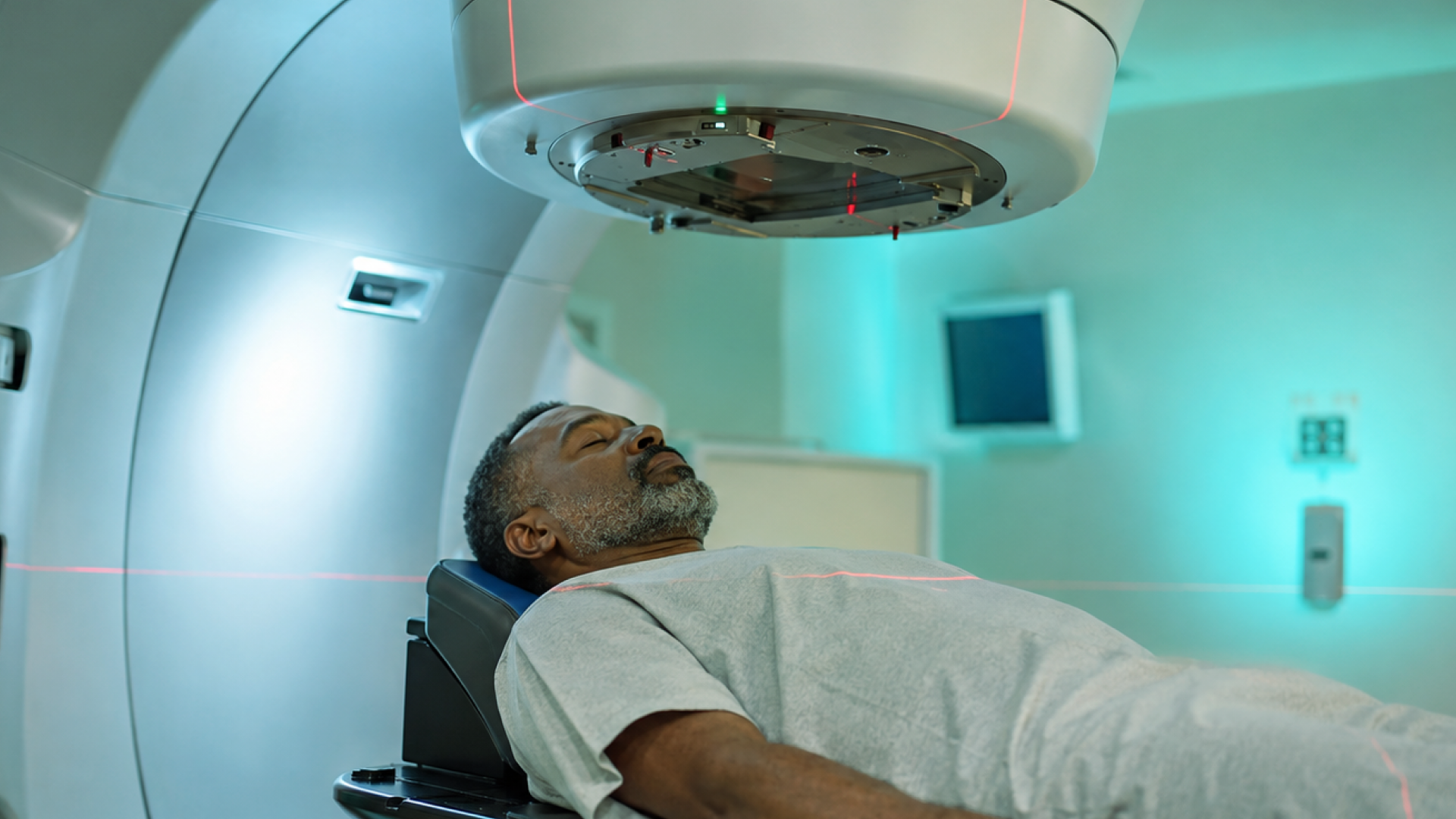
Standard external beam radiotherapy gives a modest dose each weekday over several weeks. SABR concentrates many beams from different angles onto a small target, so the tumour gets a very high dose and surrounding tissue much less. That allows a whole course in one, three, five or eight sessions. The word ablative is the important one: the intent is to destroy the secondary, not shrink it.
In June 2026, following the PACE-B trial, all 48 NHS radiotherapy centres in England began offering five-session SABR to eligible men with early prostate cancer. The equipment and planning skills are shared, so centres doing high volumes of five-fraction prostate work tend to handle small metastatic targets well too.
How MRI guidance changes SABR for oligometastatic cancer
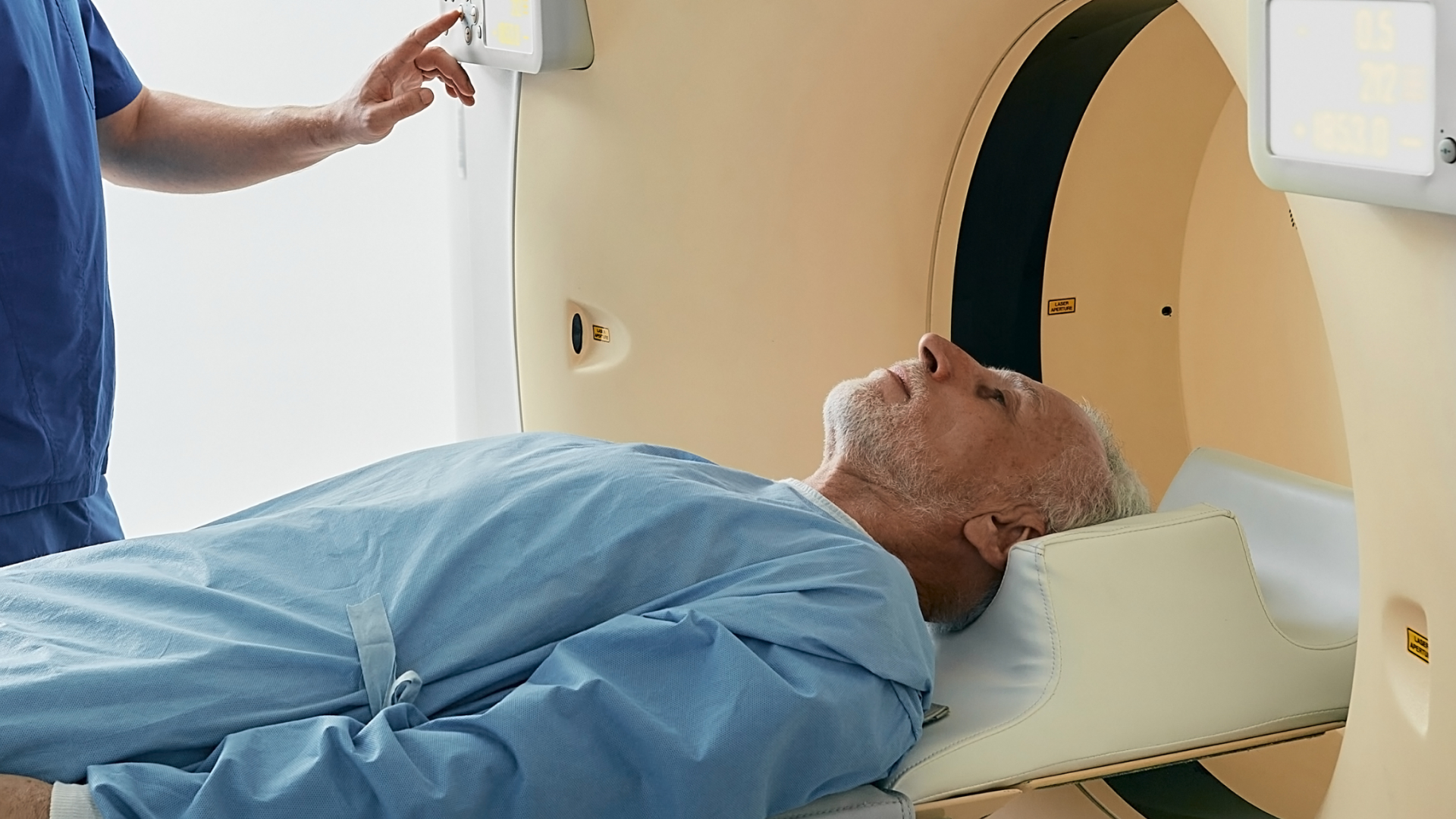
Ordinary machines line you up using X-ray or cone beam CT, which shows bone clearly and soft tissue poorly. An MR Linac takes magnetic resonance images while you are on the couch, so the tumour and nearby organs are seen directly, not inferred.
That counts most in three situations: when the target sits within millimetres of bowel or spinal cord, when it moves with breathing, and when the area has been irradiated before. Dr Perna uses MRI-guided delivery for these cases, including re-irradiation of previously treated areas. Sessions take longer in exchange for tighter margins.
Thinking about stereotactic radiotherapy for a small number of secondaries?
Dr Carla Perna treats oligometastatic disease with stereotactic radiotherapy, including MRI-guided delivery for targets close to bowel, spinal cord or previously treated tissue.
What the evidence shows about SABR for oligometastatic cancer
Two studies carry most of the weight in UK practice. SABR-COMET randomised 99 people with a controlled primary and up to five secondaries. In the long-term analysis, 42.3% of the SABR group were alive at five years compared with 17.7% of the control group. It also recorded real harm: 29% had side effects of grade 2 or worse, and three patients died of treatment-related complications.
The NHS Commissioning through Evaluation programme then treated 1,422 patients at 17 English centres, with overall survival of 92.3% at one year and 79.2% at two years. Fatigue was the most common serious side effect, at 2.0%, and no deaths were attributed to treatment.
One detail rarely reaches patient information. Prostate cancer was the most common primary, at 406 of the 1,422 patients. Men with prostate cancer are not a minority group within SABR for oligometastatic cancer. They are the largest group in it.
Both have limits. SABR-COMET was phase II, and the NHS study had no comparison group. Some good outcomes reflect selection, because people chosen for SABR tend to have slower-growing disease anyway. Two phase III trials are still running, the larger due in 2029. SABR offers selected people a real chance of longer control with modest risk. Anyone promising a cure is going beyond the evidence.
What treatment involves, step by step
Most people booked in for SABR for oligometastatic cancer expect something closer to surgery, and are surprised how ordinary the days feel.
- Planning scan. A dedicated CT in the exact treatment position, often merged with an MRI or PET. Allow about an hour.
- Immobilisation. A vacuum cushion, body frame or mask. It feels restrictive, and it is what allows millimetre accuracy.
- Breathing control. Lung and liver tumours move as you breathe, so you may hold your breath for 20 seconds at a time.
- A wait of one to two weeks while physicists build and check your plan. This is quality assurance, not a delay.
- Treatment. Usually 30 to 60 minutes a session, most of it positioning. The beam runs for a few minutes, and you feel nothing.
You can drive yourself to appointments, and there is no radiation risk to others afterwards.
Side effects and the scan that looks worse
Most people find SABR for oligometastatic cancer easier than expected. Fatigue is the common thread, usually building in the week or two afterwards. Other risks depend on the area treated. Lung treatment can cause a cough and inflammation weeks later. Liver treatment can cause nausea and raised liver enzymes, the most common serious event in the NHS study at 0.6%. Spine and bone treatment can cause a pain flare.
The follow-up scan deserves more warning than it gets. At three months, the treated area often looks larger, denser or more inflamed than before, and in the lung radiation change can mimic a growing tumour on CT for six to twelve months. That is expected, and your team will usually recommend watching rather than acting.
New secondaries do appear in some people afterwards, and that does not mean the first treatment was pointless. Ask what the plan would be if new spots appeared, before you need the answer.
Private care, re-irradiation and trials
SABR for oligometastatic cancer is usually added to systemic treatment, not instead of it. Chemotherapy is normally paused briefly around treatment days, while immunotherapy and hormone treatments carry on. In oligoprogressive disease, treating one or two growing spots may keep you on a drug still working elsewhere. For men whose prostate cancer has moved further, Lutetium PSMA therapy sits in that wider picture.
Arranging SABR for oligometastatic cancer privately
Private care offers speed and continuity: planning within days, and the same consultant throughout. It does not offer better radiotherapy than an NHS SABR centre, and any provider suggesting otherwise should be treated with caution. Ask for a written cost breakdown, check insurer pre-authorisation, and share your scans with your NHS team.
Being told an area has “had its dose” is not always the end of it. Re-irradiation is demanding, but specialist centres do it in selected cases, particularly spinal and pelvic sites. Trials are worth asking about if you fall outside the criteria.
Talk through your scans with a specialist.
Dr Carla Perna is a Consultant Clinical Oncologist specialising in prostate, renal and oligometastatic cancer, with clinics across Surrey and London. Her practice covers stereotactic radiotherapy, MRI-guided treatment, five-fraction radiotherapy and Lutetium PSMA therapy, so the conversation is not limited to one technique.
Frequently Asked Questions
Can SABR cure cancer that has already spread?
For a small number of carefully selected people, it appears to give very long-term control. In SABR-COMET, 42.3% of the SABR group were alive at five years against 17.7% given standard care alone. That is not a cure, and confirming trials are still running.
Am I eligible for SABR for oligometastatic cancer on the NHS?
In England, you need a controlled primary cancer and no more than three secondaries outside the brain, in bone, spine, lymph nodes, liver, adrenal gland or lung, each under 5 cm, appearing at least six months after primary treatment.
How many SABR sessions will I need?
Usually between one and eight, most commonly three to five, every other day rather than daily. The number depends on the site, the size of the tumour and how close it sits to the spinal cord or bowel.
Does SABR hurt?
The treatment is painless, and you feel nothing while the beam is on. The uncomfortable part is holding still in the immobilisation device. With bone secondaries, you may notice a pain flare afterwards, which usually settles with painkillers or steroids.
Can I have SABR if I have already had radiotherapy to that area?
Sometimes. Healthy tissue has a lifetime dose limit, so re-irradiation is demanding, but specialist centres do it in selected cases, and MRI-guided delivery helps by keeping margins tight. Bring details of your previous radiotherapy, as the original plan must be reviewed alongside current scans.
How long before I know whether SABR has worked?
The first assessment scan is around three months, and often shows inflammation that can look like growth. A clearer picture emerges between six and twelve months, so your team will normally recommend watching rather than acting.