A step-by-step guide to what happens during an MR Linac radiotherapy session, from the safety check to the pause in the middle, how long it takes and what it feels like.

Key takeaways
- An MR Linac session takes 30 to 60 minutes on the couch, only a few minutes of which is radiation.
- A silent pause of five to twenty-five minutes sits in the middle, while the team rebuilds your plan.
- The scans and the beam are painless. The only discomfort reported comes from lying still on a firm couch.
- Metal is the one real safety issue. Tell your team about every implant and procedure.
- Tighter targeting can mean fewer visits. Some prostate cancers are treated in five sessions rather than twenty.
- You are not locked in. Standard radiotherapy stays available at any point.
Most pages about an MR Linac session explain the machine, not the appointment. This guide focuses on what actually matters to you during an MR Linac appointment. It covers how long you’ll be there, whether it hurts, and why it takes longer than other radiotherapy sessions you may be aware of.
This guide covers those in order. It applies to MRI-guided treatment in the UK, including the stereotactic radiotherapy courses given this way for prostate cancer, renal cancer and oligometastatic cancer.
What the MR Linac is, in plain terms
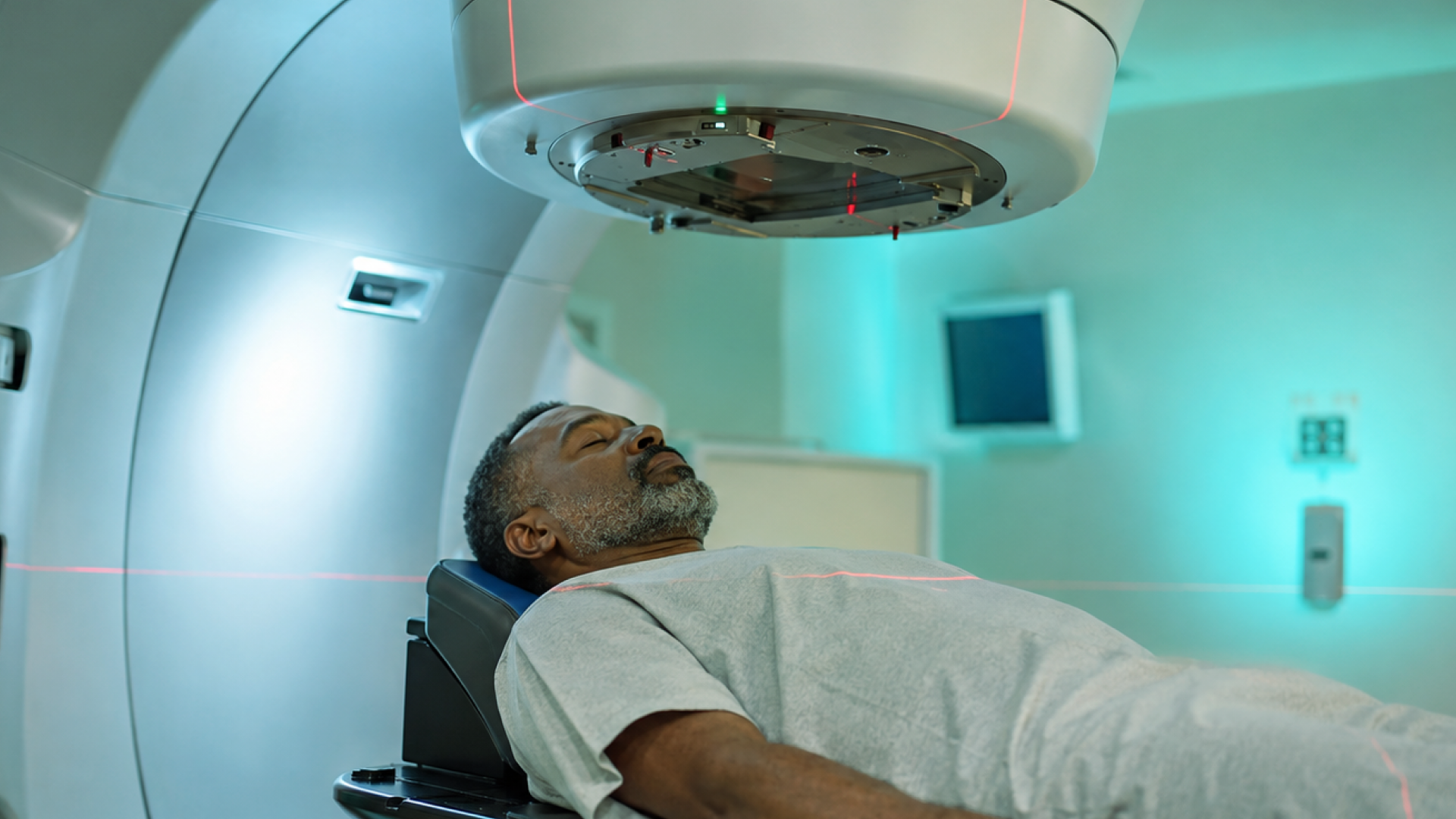
An MR Linac is two machines in one. An MRI scanner, which shows soft tissue in detail without radiation. And a linear accelerator, the standard machine for external beam radiotherapy. Together they let your team see the tumour at the moment they treat it.
On a standard linac, your position is checked with X-ray images, which show bone well and soft tissue poorly. During an MR Linac session, those checks are MRI scans instead, showing the tumour far more clearly and adding no radiation dose.
Your insides move. The bladder fills, the bowel shifts, the diaphragm rises with every breath. Seeing that live means the plan can be rebuilt around where things sit today, and the beam held if the tumour drifts. That is what makes a higher dose in fewer visits possible.
Only a few UK centres have one. The Elekta Unity is at The Royal Marsden and The Christie. The MRIdian is used privately, at GenesisCare centres in Surrey and Oxford and inside Cromwell Hospital in London. Dr Carla Perna treats on all the GenesisCare machines across the UK, and sits on the advisory group that peer-reviews MR Linac cases for urological cancers. You can read more about Dr Perna’s clinical background here. If your local hospital has no MR Linac, ask whether referral elsewhere is appropriate. For many cancers, a standard linac is the right clinical choice, so a no is a legitimate answer rather than a door closing.
Before your first MR Linac session
Two appointments sit between the decision and your first treatment. One is a conversation, and the other is a set of safety questions that cannot be skipped.
The MRI safety screening
This is the safety-critical part, and the one most often glossed over. An MRI magnet is extremely powerful and never switched off.
You will be asked detailed questions beforehand. Answer them carefully, and mention anything at all, even if it happened years ago. Pacemakers, defibrillators, cochlear implants, aneurysm clips and metal fragments in the eyes most often stop MRI going ahead. Some rule it out entirely. Many do not, but need checking against the manufacturer’s specification, which takes time and raising them early avoids a cancelled appointment.
What to bring to an MR Linac session, and what to leave at home
Wear clothing with no metal, no zips, studs, underwired bras, hooks or metallic thread. Leave watches, jewellery, hearing aids, glasses and anything electronic outside the room, and note that bank cards are wiped by the magnet. Mention permanent make-up and cosmetic tattoos, as some pigments contain iron oxide and can warm slightly during a scan.
For prostate and pelvic treatment, you may be asked to drink a set amount of water at a set time, so the bladder is comfortably full. Do that the same way every day, as a consistently prepared bladder is what lets the team keep the treated area small.
Step by step: what happens in an MR Linac session
Centres run slightly differently, but the shape of the appointment is consistent.
- You check in, are asked the safety questions again, and change into a gown.
- You go into the treatment room. It looks more like an MRI suite than a radiotherapy room.
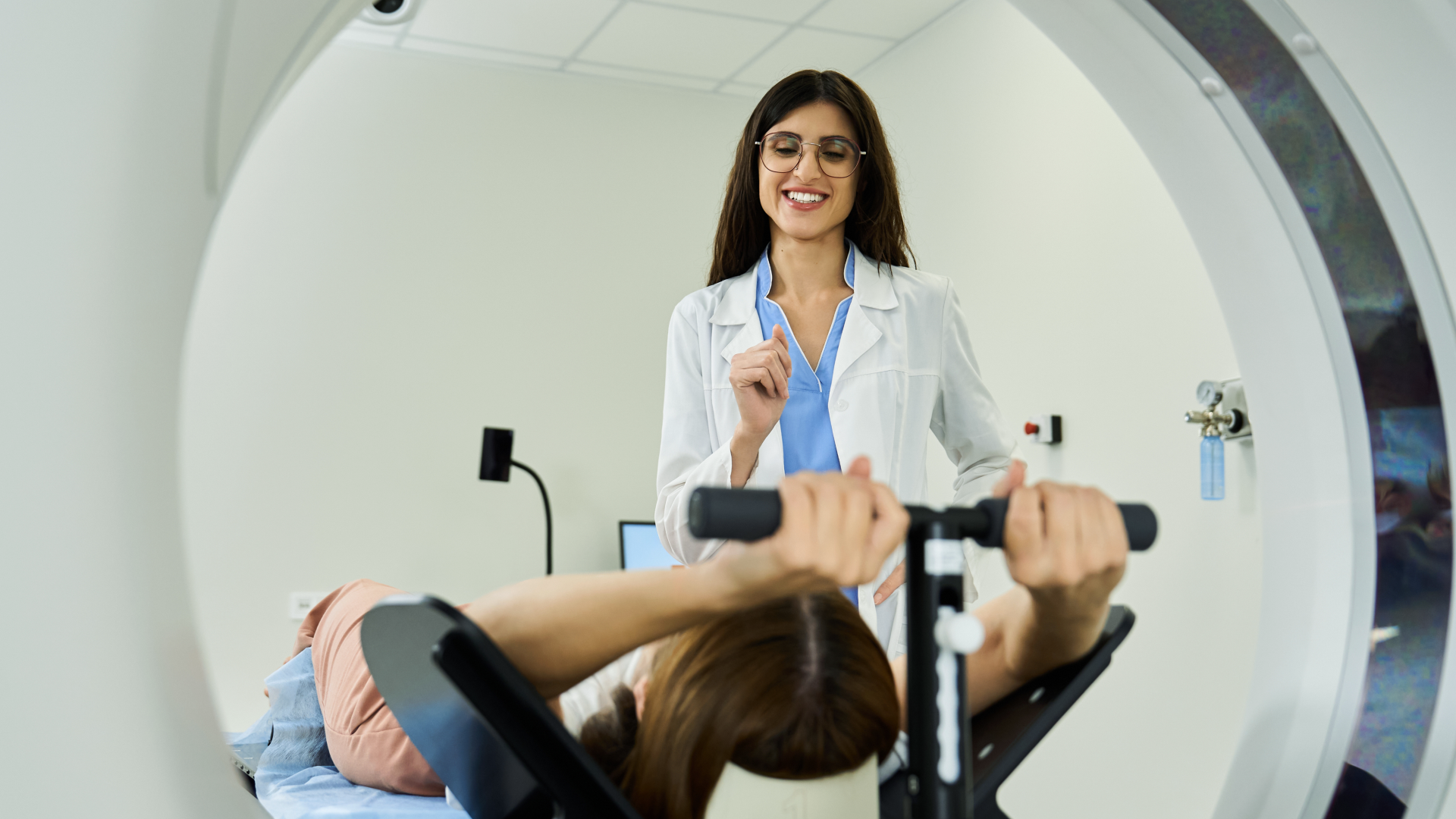
- The radiographers position you using skin marks, lasers and moulded supports. This is the slowest and most important part.
- Lightweight padded coils are laid over the treatment area. They do not press on you.
- You are given ear protection and a call button to hold throughout.
- The team leaves, and the couch moves in. They watch you on camera and speak over an intercom.
- The first MRI scan runs. A few minutes, noisy, completely painless.
- The pause. The team compares today’s anatomy with your plan and adapts it.
- The radiation is delivered, usually in a few minutes. You feel nothing at all.
- The couch comes out, and you get up. No recovery period, nothing to wait for.
Considering MRI-guided treatment for prostate, renal or oligometastatic cancer?
Dr Perna delivers MRI-guided radiotherapy and helped introduce five-day prostate radiotherapy, five-fraction SABR and prostate re-irradiation across the GenesisCare network. To find out whether an MR Linac session suits your diagnosis, or for a second opinion on a plan already offered.
The pause in the middle, and why nobody warns you about it
This is the single most useful thing to know before your first appointment, and it is rarely explained in advance.
After the first scan, there is a wait, anywhere from five to twenty-five minutes. You are still on the couch. The machine has gone quiet, and nothing appears to be happening.
A great deal is happening. Your oncologist, a physicist and the radiographers are comparing that scan against your original plan. Your bladder may be fuller than usual. The bowel may have moved. The tumour may have shrunk since last week. Where that happens, the plan is rebuilt around today’s anatomy and checked for safety before anyone presses a button. That is the reason you are on this machine rather than a standard one.
Dr Perna spends that pause in the control room with the physics team, and it is where the real work of the day gets done. Knowing that changes the experience. A silent wait you were not expecting feels like something has gone wrong. The same wait, understood, is simply the team being careful on your behalf.
What an MR Linac session feels like
People imagine something far more dramatic than the reality. Three things account for most of the worry.
Noise, and the tunnel
MRI scanners are loud. Knocking, thumping and a repetitive tapping that shifts as the scan changes. It is startling the first time and unremarkable by the third. You will be given ear protection, and most centres can play music.
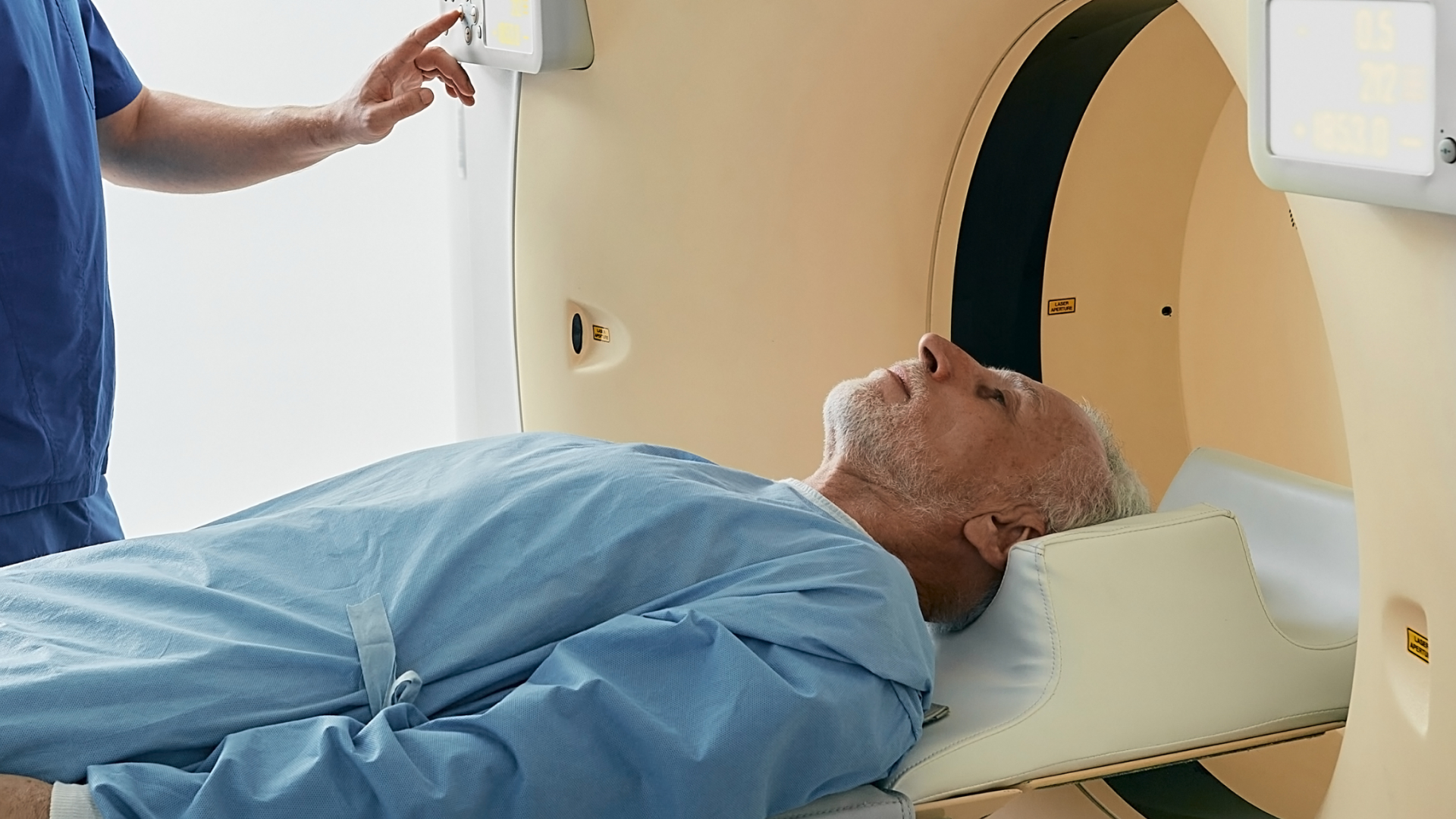
The bore is a tunnel roughly 70 centimetres across, well lit with air moving through it. For prostate and pelvic treatment, your head is often outside it, which surprises people who were dreading it.
If you know MRI scanners are difficult for you, say so at the consultation rather than on the morning of your first treatment, as options work far better with notice.
Whether an MR Linac session hurts
The scans and the radiation are both painless. There is no heat and no awareness of the beam. The only discomfort comes from lying still on a firm couch, which can be a real issue with back or hip problems. Tell your radiographers before you get on, as they can usually adjust padding. A few people notice a brief metallic taste, tingling or warmth during the scan. These come from the MRI, not the radiotherapy, and they pass.
Staying still during an MR Linac session
Staying still is your only job. Breathe normally unless told otherwise, and swallowing and blinking are fine. For some chest treatments, you may be asked to hold your breath for 15 to 25 seconds, and you will be coached through it. If you need to cough or move, press the call button.
How long an MR Linac session takes
Budget 30 to 60 minutes on the couch, plus changing and checking in. A standard appointment is often 10 to 15 minutes, so it is worth saying where the extra time goes. It is not extra radiation, as beam-on time is comparable. The extra is scanning, replanning and checking. Allow a two-hour window at the hospital, and you can drive yourself home afterwards unless you have taken a sedative.
How many sessions you will have
Each session is called a fraction, and the number depends on your cancer and the intent of treatment. The MR Linac makes the biggest difference in stereotactic treatment, where a high dose is given precisely in a few fractions. For some prostate cancers, that is five sessions rather than twenty.
Five-fraction prostate SABR is one of the pathways Dr Carla Perna helped bring into routine private practice, alongside re-irradiation for cancer that has returned. Where radiotherapy is not the answer, brachytherapy, hormone therapy or lutetium PSMA therapy may suit you better, and that is worth raising early.
Side effects
Radiotherapy side effects depend on the part of the body treated and the dose, not on which machine delivered it. Pelvic treatment may cause bowel and bladder irritation, and tiredness and skin changes are common. Our guide to the side effects of hormone therapy and radiotherapy covers these.
Side effects from the MRI part are essentially nil. There is no radiation dose from the scanning and no lasting effect from the magnetic field.
Better targeting means less healthy tissue treated, which generally means fewer or milder side effects. The randomised MIRAGE trial tested this in prostate cancer and found that moderate or worse urinary side effects affected 24.4% of men treated with MRI guidance, compared with 43.4% treated with CT guidance. That is encouraging rather than guaranteed. Dr Perna has co-authored UK outcome studies on stereotactic MR-guided adaptive radiotherapy for prostate cancer, and you can read about that on our research page. Report side effects as they appear rather than saving them for your review, as most are easier to manage early.
If you find it difficult, or change your mind
This deserves saying clearly, because almost nobody says it – you are not locked in.
If the sessions are too long, or the tunnel worse than you expected, you can move to standard radiotherapy, a well-established treatment that has been curing cancers for decades. Switching means a new planning CT scan and a short delay, and your team will arrange it.
Say something at the first sign of difficulty rather than after several hard sessions. Better padding, a different music setup, or a quieter slot often solve it without changing treatment.
Talk through your options with a specialist
Deciding between an MR Linac session, standard radiotherapy, brachytherapy or a systemic treatment benefits from expert input. As a Consultant Clinical Oncologist and MRI Linear Accelerator specialist, Dr Perna can discuss the options available to you. Send an enquiry to explore what might work best for your circumstances.
Frequently Asked Questions
How long does an MR Linac session take?
Most sessions take 30 to 60 minutes on the couch, with complex adaptive treatments occasionally running to around 75 minutes. Only a few minutes of that is radiation. Allow around two hours at the hospital, and expect your first session to take longer than later ones.
Does an MR Linac session hurt?
No. Both the scans and the radiation are painless, and you feel nothing from the beam. The only discomfort people report comes from lying still on a firm couch, particularly with back or hip problems. Tell your radiographers before you get on the couch, as they can usually adjust padding.
Why is there a long pause during the session?
Your oncologist, physicist and radiographers are comparing today’s images with your original plan and adapting it to where your organs and tumour actually are. This normally takes five to twenty-five minutes, and you stay on the couch. Nothing is wrong. That adaptive step is the main reason MR Linac treatment is more precise than standard radiotherapy.
Am I radioactive after MR Linac treatment?
No. External radiotherapy does not make you radioactive, because the radiation passes through your body, and it stops when the machine stops. You are safe to be around children, pregnant women and pets straight away. This differs from internal radiotherapy such as brachytherapy, where you would be given specific instructions.
Can I have MR Linac treatment with metal implants?
It depends on what and where. Pacemakers, defibrillators, cochlear implants, aneurysm clips and any history of metal fragments in the eyes may rule out MRI. Many joint replacements, stents and surgical clips are safe, but they must be checked against the manufacturer’s specification first. Tell your team about every implant, procedure and tattoo as early as possible.
Do I have to have MR Linac treatment if I have been offered it?
No. If you find the sessions too long, the tunnel too difficult, or you simply prefer not to, you can move to standard radiotherapy, which is a well-established and highly effective treatment. Switching usually needs a new planning CT scan and a short delay. Tell your team early rather than pushing through several difficult sessions.