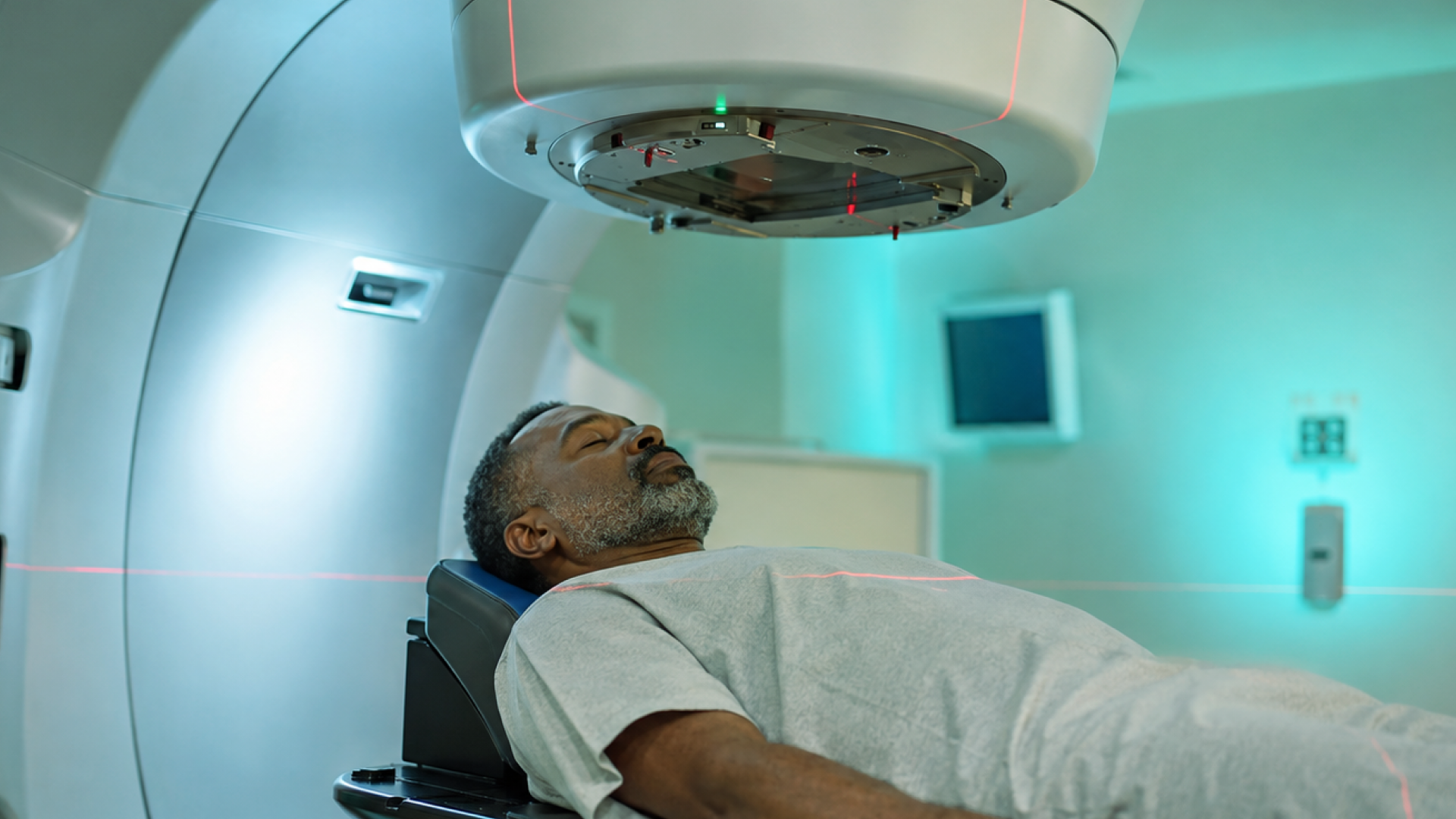
Re-radiation for prostate cancer is more achievable than most patients are told. Dr Carla Perna, UK consultant oncologist, separates myth from clinical fact.

Re-radiation for prostate cancer is one of the most misunderstood treatment options in UK oncology today. Many men hear the same line in the clinic. They are told they have already had their radiotherapy, so it cannot be offered again. That advice was correct twenty years ago. It is not correct in 2026.
If you have had radiotherapy for prostate cancer and your PSA is rising, this article is for you. We will walk through the seven biggest myths about a second course of radiotherapy. We will look at what modern image-guided techniques have actually changed. And we will explain how a specialist works out whether re-treatment is safe in your case.
What re-radiation for prostate cancer actually means
Re-radiation for prostate cancer means giving a second course of radiotherapy to the same area treated before. Most often, the cancer has come back inside the prostate itself. In men who had surgery first, it may come back in the prostate bed. Doctors also call this re-irradiation or salvage radiotherapy.
The three main modern methods are stereotactic body radiotherapy, also called SBRT, high dose rate brachytherapy, and MRI-guided radiotherapy. Each one gives a very precise dose to a small target. Each one keeps the bladder and bowel out of harm’s way.
When patients usually face this decision
The trigger is almost always a rising PSA after a first course of radiotherapy. The next step is imaging. A PSMA PET scan checks whether the cancer is still local or has spread. If it is still local, a multiparametric MRI maps exactly where the recurrence sits.
Around one in three men has biochemical failure within 10 years of primary radiotherapy. This conversation comes up in the clinic far more often than patients realise.
Why is old guidance being rewritten?
The old rule had a real reason behind it. The 3D conformal radiotherapy of the 1990s and early 2000s gave wide doses to a large area. Healthy tissue around the prostate, especially the rectum and bladder, took a hit in the first round. It could not safely take a second.
That picture has changed. MRI-guided radiotherapy sees the tumour and the bladder on the day of treatment. It then adjusts the beam to match. SBRT delivers higher doses in just 5 sessions, with margins smaller than a five pence coin. The risk picture for re-radiation is nothing like it was.
Myth 1: You can only have radiotherapy once in your lifetime
This is the most common thing men hear in the clinic. It is no longer true as a blanket rule. Modern image-guided techniques have made a second course safe for carefully selected patients.
Three things have changed the picture. The machines are far more precise. Imaging now shows exactly where the recurrence sits. Rectal spacer gels push the rectum away from the radiation field.
Published series in salvage SBRT and HDR brachytherapy report acceptable toxicity and meaningful disease control. A salvage re-irradiation feasibility study delivered 35 Gy in 5 fractions with manageable side effects and short treatment times. The honest question today is not whether re-radiation is possible. It is whether you are a candidate, and which technique suits you.
Myth 2: Re-radiation always causes severe side effects
Side effect risk does go up with a second course. That is the honest answer. What has changed is how high the risk goes, and how much can be done to keep it low.
Older techniques often caused serious bladder or bowel problems. Modern image-guided radiotherapy now keeps the rate of grade 3 side effects in single digits. Grade 3 means side effects that need hospital treatment. The drop is driven by better imaging and tighter targeting.
How modern radiotherapy reduces side effects
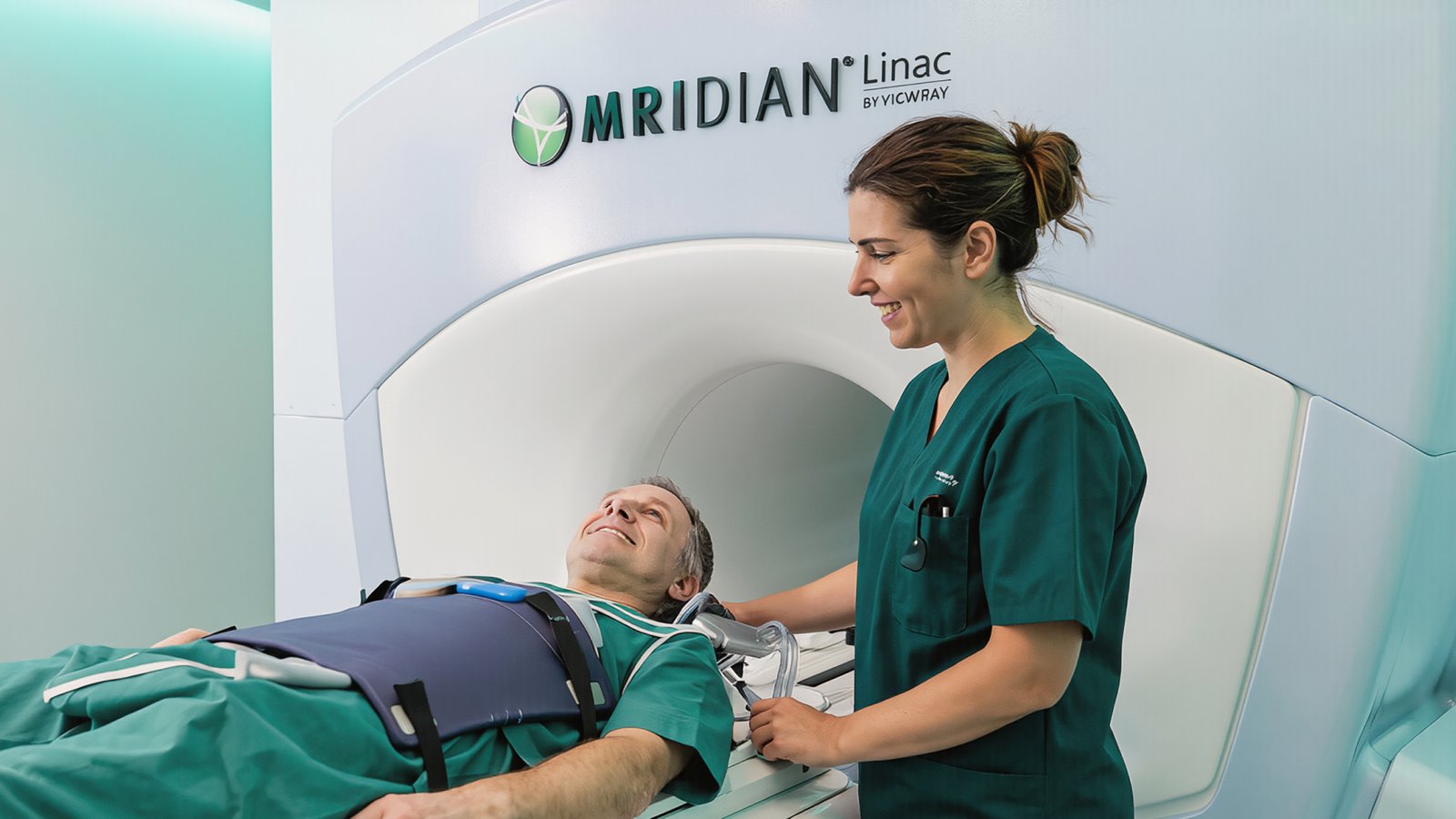
A few practical steps make most of the difference. A rectal spacer, such as SpaceOAR pushes the rectum about a centimetre away from the prostate before treatment starts. Tiny gold markers, called fiducials, are placed in the prostate so the beam tracks the gland as it moves. On an MRI-Linac, the team sees the bladder filling, the rectum moving, and the prostate shifting in real time. The dose is then adjusted to that day’s anatomy.
Together, these tools mean that salvage SBRT for prostate cancer can deliver a high dose to a 1 to 2 cm target. The rest of the pelvis is largely spared. That is the technical reason the old advice no longer applies.
Myth 3: Only surgery can treat recurrence after radiotherapy
Salvage prostatectomy is a surgery to remove the prostate after a course of radiotherapy. It does exist. It is offered in a small number of UK centres. It is also one of the hardest cancer operations to recover from.
A systematic review of salvage prostatectomy in 3,836 patients found high rates of urinary incontinence and erectile dysfunction after surgery. Tissue that has had radiotherapy heals differently. The operation is technically more difficult.
Focal salvage options such as SBRT, HDR brachytherapy and high-intensity focused ultrasound are now real alternatives. The point is not to push one option over another. Men with recurrence after radiotherapy have more than one path. A specialist should walk through all of them before you commit.
Myth 4: Re-radiation does not work
This view often comes from older information online. The clinical picture is more positive than that.
A retrospective multicentre study of salvage stereotactic radiotherapy reported 83% of patients with a positive biochemical response at three months. The median time to a further PSA rise was 27 months. That is meaningful disease control for men who would otherwise move straight to lifelong hormone therapy.
A good outcome from re-radiation for prostate cancer is not measured the same way as a first cure. The goals are to keep PSA stable, to delay hormone therapy, and to protect quality of life. For the right patient, all three are achievable.
How a specialist decides if you are a candidate for re-radiation for prostate cancer
The decision is never made on a single test. A specialist runs a full assessment. The case is then discussed at a multidisciplinary team meeting before any treatment is offered.
Four things sit at the centre of the decision. Where the cancer is now. What is the dose the area receives the first time? What condition are your bladder and bowel in today? And what matters to you about side effects and time?
Tests you can expect before re-radiation for prostate cancer
Before any decision is made, a specialist will arrange the following:
- A PSMA PET-CT scan to check that the recurrence is local rather than spread to bones or lymph nodes
- A multiparametric MRI to map the exact site of recurrence in the prostate or prostate bed
- A targeted biopsy of the suspected recurrence in some cases, to confirm active cancer
- A review of your original radiotherapy records, including total dose and the areas treated
- Bladder and bowel function checks, sometimes with a cystoscopy or proctoscopy
- A PSA trend over time, to confirm the rise is real and not a one-off blip
Patients who are usually not suitable
Re-radiation will not suit everyone. Men with bulky local disease, severe pre-existing bladder or bowel toxicity from the first course, or distant metastases on PSMA PET are usually better served by a different approach. The same applies to men with very poor baseline urinary or bowel function. An honest specialist tells you this upfront.
Myth 5: Hormone therapy is the only option after radiotherapy fails
Many men with biochemical recurrence are placed straight onto androgen deprivation therapy, also known as hormone therapy. It works. It is rarely the only option. And it is not curative on its own.
Long-term hormone therapy comes with real costs. Hot flushes, fatigue, loss of muscle mass, bone thinning, mood changes, and loss of libido are all common. Men in their fifties and sixties may face decades of treatment. They have a right to ask whether a local salvage option could delay or remove the need for lifelong hormones.
For men with a confirmed local recurrence and no distant spread, salvage radiotherapy or salvage brachytherapy can offer the chance of longer-term control. That may mean avoiding lifelong hormone treatment. The conversation is worth having.
Myth 6: Re-radiation is not available in the UK
Many UK centres do not offer salvage re-irradiation. The reason is access to equipment and clinical experience. It is not the law, and it is not the science.
MRI-Linac machines are still rare in the UK. The number of clinicians who deliver salvage SBRT or salvage HDR brachytherapy routinely is small. If your local NHS centre does not offer it, you may be told it is not an option. That is not the same thing.
Specialist private centres and a handful of large NHS units do offer re-radiation for prostate cancer. Patients in the UK have the right to ask for a second opinion through the NHS. You can also seek a private specialist’s view. If you have been told the only path forward is hormone therapy, a second opinion from a clinical oncologist with these modern techniques is reasonable.
What to ask if you are considering re-radiation for prostate cancer
The following questions help you get clear answers in a consultation. They are the same questions a specialist would expect from a well-informed patient.
- Is my recurrence local, or has the cancer spread elsewhere
- What imaging has confirmed this, and how recent is it
- Has my original radiotherapy dose been reviewed by the planning team
- Which re-radiation technique would suit my anatomy and previous treatment
- What is the likely side effect profile in my specific case
- What is the realistic chance of long-term control
- Has my case been discussed at a multidisciplinary team meeting
- If I am not a candidate, what other options remain on the table
FAQs about re-radiation for prostate cancer
Can you have radiotherapy twice for prostate cancer
Yes, in many cases. Modern image-guided radiotherapy, including SBRT, MRI-guided radiotherapy and HDR brachytherapy, has made a second course safe for selected men. The decision depends on the location of the recurrence, the dose given the first time, and your current bladder and bowel function.
How long after the first radiotherapy can you have re-radiation
There is no fixed minimum. Most specialists prefer at least two years between courses. This gives healthy tissue time to recover. The bigger factors are PSA pattern, imaging findings and overall fitness rather than the calendar.
What is the success rate of re-radiation for prostate cancer
Reported biochemical response rates from salvage SBRT and salvage HDR brachytherapy series sit in the range of 70 to 85 per cent at one to two years. A good outcome is measured by PSA control, time without hormone therapy, and quality of life kept intact. It is not a single cure rate.
Is MRI-guided radiotherapy better for salvage treatment
It offers real advantages. The team can see the prostate, bladder and bowel on the day and adjust the dose to that day’s anatomy. For a re-treatment where every millimetre counts, that accuracy makes a difference. It is not the only option, but it is one of the strongest where available.
Does re-radiation cause incontinence or erectile dysfunction
The risk of urinary, bowel and erectile side effects is higher after a second course than after the first. Modern techniques, rectal spacers and careful patient selection bring this risk down. A specialist should give you a realistic estimate. The estimate will be based on your own anatomy and your first treatment records.
Should I get a second opinion before agreeing to hormone therapy alone
If you have a rising PSA after radiotherapy and your only offered treatment is lifelong hormone therapy, a second opinion from a clinical oncologist who works with modern salvage techniques is reasonable. Hormone therapy alone is rarely curative. For some men, a local salvage treatment can offer the chance of longer-term control.
A final word
A rising PSA after radiotherapy is one of the hardest appointments to walk into. Most men have spent months or years thinking that the course of treatment had dealt with the problem. Being told the only option left is hormone therapy can feel like a door closing.
That door is not as closed as it used to be. Re-radiation for prostate cancer is now a real option for selected men. The techniques that make it possible did not exist when the old rule was written. If you have been told you have run out of options, a specialist opinion is worth seeking.