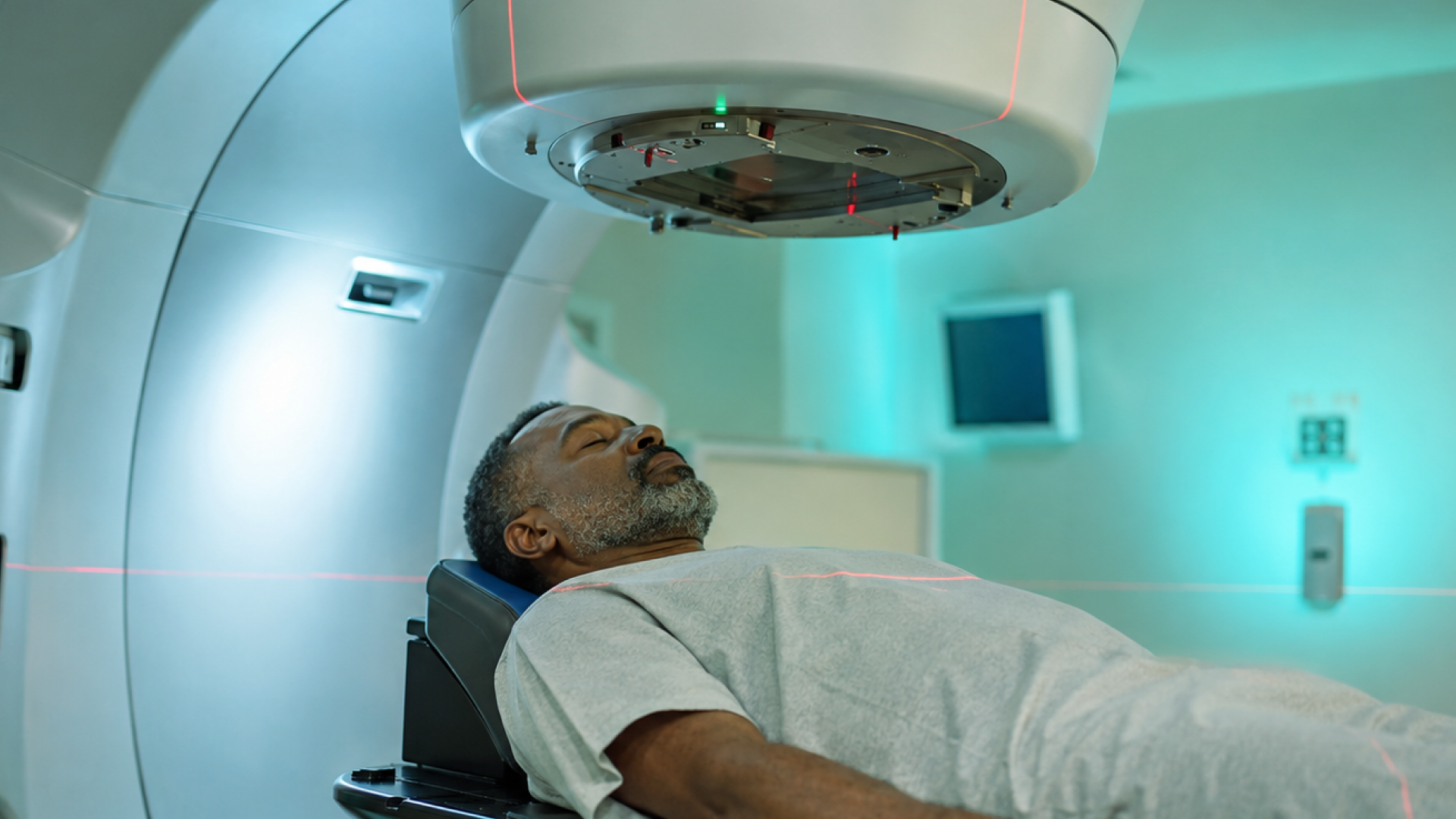
SABR for kidney cancer is a type of radiotherapy that treats a tumour in a few short sessions. It’s not surgery. If your team has mentioned it, you might have heard it is very precise. It’s likely you’re being considered for it because surgery is difficult or not what you want.

This guide walks through what usually happens, from the first planning scan to follow-up months later.
SABR for kidney cancer in plain English
SABR stands for stereotactic ablative body radiotherapy. You may also see it called SBRT, which stands for stereotactic body radiotherapy. Both names describe the same approach. SBRT for kidney cancer and SABR for kidney cancer mean the same treatment.
Conventional radiotherapy gives a small dose every weekday for several weeks. SABR delivers a much higher dose in a few visits. The beams are tightly focused around the tumour. In everyday terms, stereotactic radiotherapy for kidney cancer means a lot of radiation, placed very accurately, in very few visits. For a general overview, see the page on stereotactic radiotherapy.
Kidney cancer was once thought to resist radiation, because small daily doses did not control the tumour reliably. SABR uses far higher doses. The cancer has not changed.
Why the kidney is hard to target
A kidney tumour does not sit still. It moves with every breath you take. It lies close to the bowel, the liver and the spinal cord. Most people also have a second kidney that needs protecting. That is why kidney cancer radiotherapy can take more planning than treatment in other parts of the body.
Some centres treat while you hold your breath. Others use a belt that limits your movement. MRI-guided treatment goes a step further because the machine includes a scanner that can monitor the tumour as you breathe.
Who can have SABR for kidney cancer in the UK?
Where it can be done safely, surgery is still the standard treatment for a tumour inside the kidney. SABR is mainly used for kidney cancer when an operation carries too much risk. It’s also considered when a person chooses not to have surgery. Doctors may also call the disease renal cancer.
NICE sets national clinical guidelines. It says that SABR should be considered for small kidney masses when surgery is not needed, possible or suitable. Remember that guidance and funding are different things. NHS England’s funding rules are narrower, and your team can explain which apply to you.
The NHS England criteria in plain terms
NHS England published policy 2332 on 16 July 2026. It sets out who can receive routinely funded SABR for kidney cancer in England. All of the following apply as written:
- You are aged 18 or over
- You have a single tumour in one kidney that is larger than 4cm and up to 7cm. There must be no spread to lymph nodes or elsewhere
- A specialist team has agreed that you are medically unfit for surgery
- You are expected to live for at least 24 months, and you are well enough to be up and about for much of the day
- The diagnosis is confirmed by biopsy or by prior agreement that scans are enough
- A SABR team has confirmed that SABR is suitable.
The policy leaves out tumours of 4cm or less and cancers at stage II or beyond. Your team may still discuss SABR for those groups.
SABR compared with surgery, ablation and watching
Choosing well means knowing the alternatives. This table shows where SABR for kidney cancer sits among the main options for a tumour confined to the kidney.
|
Option |
What it involves |
Tends to suit |
|
Surgery |
An operation under general anaesthetic, followed by recovery. |
People fit enough for an anaesthetic. It remains the standard where it is safe. |
|
Ablation |
Freezing or heating the tumour through a needle. |
Smaller tumours away from major blood vessels. |
|
Active surveillance |
Regular scans, with treatment only if the tumour grows. |
Small tumours, often in older or frailer people. |
|
SABR |
High-dose radiotherapy in one to five outpatient visits, with no cuts and no anaesthetic. |
People who cannot have surgery safely, or decide against it. |
Planning and treatment days
Most people reach SABR for kidney cancer after a series of conversations. A GP or urologist usually refers you after a scan finds a kidney mass. A kidney cancer team reviews your case, and a SABR team assesses technical factors such as the tumour’s position. You may need to travel some distance.
Before the first session
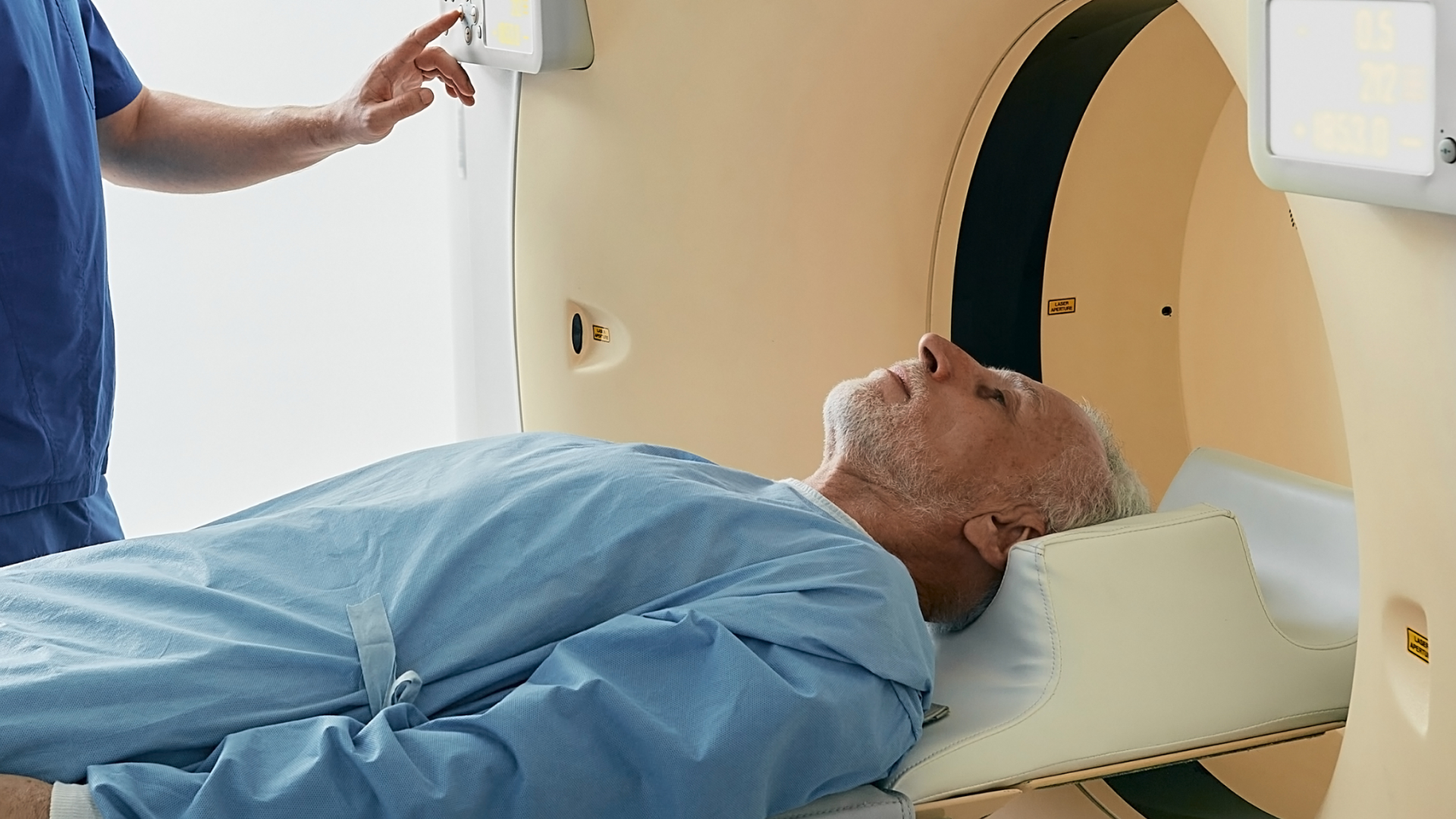
There will be a planning appointment. Nothing is treated, but a CT scan and sometimes an MRI are taken. You will be lying in the exact position you will use every time. The team will record your breathing. You may be fitted with a compression belt around your tummy to limit movement during the treatment.
Hospitals differ, so follow the instructions you’re given. Most centres ask for:
- fasting for 2 hours before scans and each treatment
- anti-sickness tablets, taken shortly before the first session
- a urine sample before the first treatment
- a list of your medicines, and a lift home.
What happens during SABR for kidney cancer
SABR for kidney cancer usually needs between one and five sessions. The NHS England policy lists three schedules. These are: 26Gy in one session, 42Gy in three sessions or 40Gy in five sessions on alternate days. Gy is the standard unit for measuring radiation dose. A Royal Free London leaflet describes one to three treatments a week, with at least 40 hours between sessions. Each appointment usually lasts 30 to 45 minutes. Most of that time goes to positioning and checking scans.
You lie still and breathe as you were taught. The radiographers watch from outside the room. There is an intercom. The machine buzzes. You should feel nothing, then you go home. If you are weighing up MRI-guided care, what an MR-Linac session is like walks you through a session step by step.
Side effects and kidney function
Most side effects of SABR for kidney cancer are short-lived. A few are rarer but more serious. You should hear about both before you agree to treatment.
In the first weeks
The Royal Free leaflet says short-term effects tend to peak 2 to 3 weeks after the course finishes. Then they can take a further 2 to 3 weeks to settle. The most common are:
- tiredness, which builds gradually
- nausea, usually controlled by anti-sickness medicine
- mild discomfort in the tummy or side
- slight darkening or itching of the skin over the treated area.
Longer term risks
Serious late-onset side effects are uncommon. Radiotherapy can affect the treated kidney, the untreated kidney, the liver and the bowel. Effects can appear months later. Doctors track kidney function with a blood test called eGFR, which estimates how well your kidneys filter blood. A normal eGFR for an adult is about 100. Chronic kidney disease may be diagnosed if it stays below 60 for 3 months.
After SABR, the treated kidney usually loses some function. In rare cases, the damage is enough to need dialysis, and the Royal Free leaflet puts the risk at 6%. Your starting kidney function matters, so your team should discuss this risk with you first.
Contact your team immediately if you have: pain in your side, a fever, vomiting that will not stop or blood in your urine.
After treatment: follow-up and scans
After kidney cancer radiotherapy, the Royal Free leaflet describes a first review 4 to 6 weeks after the course. You then have appointments every 3 to 6 months, with blood tests alongside scans.
The first scan can be unsettling. A treated tumour often stays visible for a long time. Radiotherapy stops the cells from dividing. It does not dissolve the tumour. Your team will judge the result from a pattern across several scans. A tumour that has not shrunk does not mean the treatment has failed.
What the research shows
Stereotactic radiotherapy for kidney cancer has a shorter track record than surgery. The results so far are encouraging, but they come with limits.
The main data come from FASTRACK II, a trial in Australia and the Netherlands. The trial treated 70 adults with a single kidney tumour. They either could not have surgery, were at high risk from it, or declined it altogether. Their median age was 77. After a median follow-up of 62 months, no tumour grew back in the treated area. 7 of the 70 people (10%) had a serious grade 3 side effect.
These results come from selected people at specialist centres. They cannot predict what will happen to any one person. FASTRACK II did not compare SABR with surgery, and no large randomised trial has done so yet. That is why surgery remains the standard where it is safe.
Private care, biopsy and questions to ask
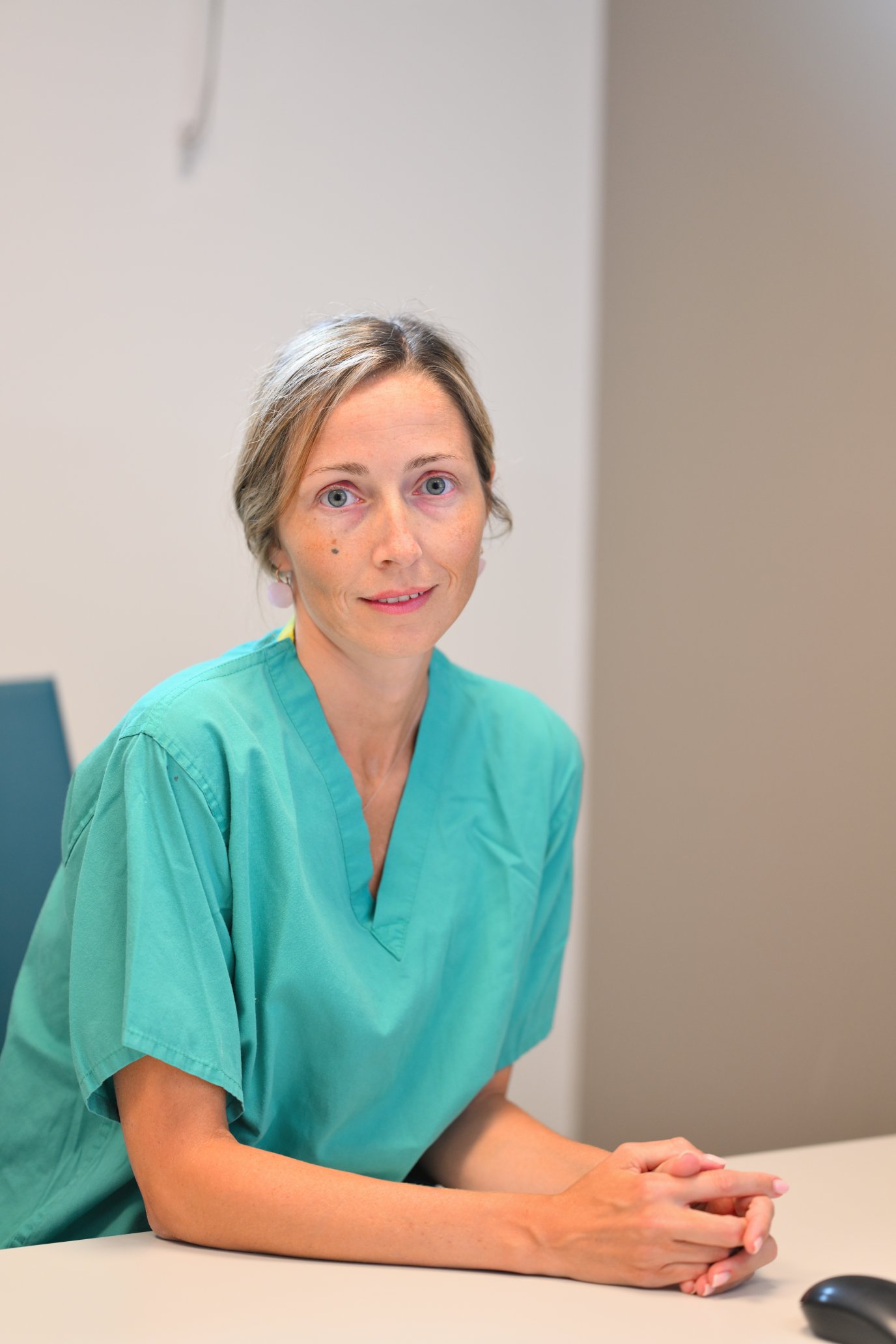
Some people want faster access, MRI-guided treatment or a second opinion. SABR for kidney cancer is available privately at a limited number of UK centres. Dr Carla Perna treats kidney tumours with SABR at hospitals across Surrey and London. Her renal cancer page explains her approach.
Radiotherapy removes no tissue, so ask whether a biopsy should be done first. Whichever team you see, it helps to ask:
- what will happen to your kidney function, and who will monitor it
- whether your insurer recognises the treatment and needs pre-authorisation.
A reputable provider will tell you where SABR is not the best choice, and will not promise results. If you would like to talk through your own situation, you can get in touch with Dr Perna’s team. If the cancer has spread, drug treatment usually leads the plan. You can read more about oligometastatic cancer and SABR for oligometastatic cancer.
When to see your GP
Many kidney cancers are found by chance on scans done for another reason. Contact your GP if you notice any of the following:
- blood in your urine, even once
- a lasting pain in your side or back
- unexplained weight loss or loss of appetite
- ongoing tiredness, fever or night sweats.
These symptoms often have other causes, but you should have them checked.
Frequently asked questions
What is SABR for kidney cancer?
SABR is radiotherapy given from outside the body. It delivers tightly focused beams of a high dose. It is not surgery and is usually given over one to five sessions.
Can I have SABR on the NHS?
Yes, if you fit the criteria. NHS England’s policy covers adults with a single T1b kidney tumour who are medically unfit for surgery. Ask your oncologist if that applies to you.
How many sessions does SABR for kidney cancer need?
Usually between one and five. Your oncologist chooses the correct schedule based on the size and position of the tumour.
What side effects can SABR cause?
Tiredness, nausea, mild discomfort, and slight skin changes are the most common. They usually settle within weeks.
Will SABR affect my kidney function?
Some loss of function in the treated kidney is likely. Blood tests will track it. Your own risk depends on how well your kidneys work before treatment.
Why does my kidney tumour still show on the scan after SABR?
Radiotherapy stops tumour cells from dividing, but does not dissolve the tumour. The mass often stays visible for a long time. A tumour that hasn’t shrunk doesn’t mean the treatment has failed.