A UK consultant oncologist explains rare and aggressive prostate cancer variants, including symptoms, genetic risks, diagnosis and treatment pathways. Book a consultation with Dr Carla Perna in Surrey or London.

Most prostate cancers grow slowly. When someone is diagnosed with a rare and aggressive prostate cancer, the situation is quite different, and the way it is managed needs to reflect that. These variants can grow fast, spread early, and sometimes produce little or no PSA, meaning routine blood tests can miss them entirely. If you or someone close to you has been told a prostate cancer looks unusual, fast-growing, or high-grade, this guide will help you understand what that means, what the diagnostic steps look like in the UK, and what treatment options exist.
This article has been written for patients and their families. It reflects current UK clinical guidance from NICE, the NHS, Cancer Research UK and Prostate Cancer UK. It is for information only and does not replace personalised advice from your own consultant.
This article is for information only. If you have concerns about your diagnosis or are unsure about a recommended plan, please speak with your GP or a specialist consultant.
What Counts as a Rare and Aggressive Prostate Cancer
A rare and aggressive prostate cancer is any subtype that falls outside the most common form, acinar adenocarcinoma, and tends to grow and spread faster than typical prostate cancer. These variants account for fewer than 5% of all cases[1]. They often produce little or no PSA, are frequently diagnosed at a later stage, and usually require urgent, multidisciplinary treatment.
In clinical practice, “aggressive” can mean two slightly different things. It can refer to an unusual cell type, such as small cell or ductal carcinoma, or it can mean a common cell type that is behaving aggressively because of a high Gleason score, Grade Group 4 or 5 disease, or rapid spread to other parts of the body. Both situations are covered here.
The Main Rare Prostate Cancer Variants Explained
When a pathologist looks at a prostate biopsy under the microscope, they identify the type of cell the cancer started in. The rare variants below behave differently from standard acinar adenocarcinoma and often need different approaches to treatment. Many of these subtypes are recognised in the World Health Organization classification used by NHS pathologists[1].
Each variant is outlined below, starting with the most commonly seen in clinical practice.
Ductal adenocarcinoma
Ductal adenocarcinoma starts in the cells lining the prostate ducts. It is sometimes found alongside the more common acinar type, though on its own it is rare. Because it can grow without producing much PSA, it may not be picked up on a standard blood test, and it can spread to nearby organs, including the bladder or rectum, earlier than typical prostate cancer[5]. Treatment usually combines surgery, radiotherapy and hormone therapy, with chemotherapy added in advanced cases.
Neuroendocrine and small cell prostate cancer
Neuroendocrine prostate cancers arise from hormone-producing cells in the prostate. The small cell form is the most aggressive subtype and behaves more like small cell lung cancer than typical prostate cancer[6]. It often produces no PSA, grows quickly, and can spread to the liver, lungs and bones early. It may occur on its own at diagnosis or, more commonly, develop in someone who has been on long-term hormone therapy for advanced disease[6]. Treatment is usually intensive chemotherapy, often combined with radiotherapy.
Squamous cell carcinoma
Squamous cell prostate cancer is very rare and behaves aggressively. It often does not respond to standard hormone therapy and is typically managed with chemotherapy, radiotherapy and, in some cases, surgery[5]. Care from a centre experienced in unusual prostate tumours is particularly important here.
When Standard Prostate Cancer Behaves Aggressively
Many people described as having an aggressive prostate cancer actually have the common acinar type, but the cells appear very abnormal under the microscope and the cancer is growing or spreading quickly. Three key measurements help a medical team understand how aggressive an individual cancer is.
Gleason score and Grade Group
The Gleason score grades the two most common patterns of cancer cells seen in a biopsy. The numbers are added together to produce a score ranging from 6 to 10. The newer Grade Group system simplifies this into five groups. Grade Group 1 is the least aggressive, equivalent to a Gleason score of 6, and Grade Group 5 is the most aggressive, equivalent to a Gleason score of 9 or 10[2]. Higher-grade cancers tend to grow faster and are more likely to spread.
PSA dynamics
A rapidly rising PSA, referred to clinically as a short PSA doubling time, is one indicator of aggressive disease. Rare variants such as small cell and ductal carcinoma sometimes produce little or no PSA, so a normal blood test does not always mean a slow-growing cancer[6]. This is one reason MRI, biopsy and, where appropriate, advanced imaging matter alongside PSA testing alone.
Stage and spread
Locally advanced disease, where the cancer has grown through the prostate capsule, and metastatic disease, where it has spread to lymph nodes, bones or organs, both indicate aggressive behaviour. Modern imaging such as multiparametric MRI and PSMA PET-CT helps your team see exactly where the disease is, which directly shapes the treatment plan[1]. A prostate cancer specialist in Surrey or London can help you understand what your staging scans show.
Symptoms That May Point to a Rare or Aggressive Variant
Early prostate cancer often causes no symptoms at all. When symptoms do appear, they are usually urinary, such as needing to pass urine more often, a weaker stream, or getting up in the night[3]. Rare and aggressive variants can cause symptoms that go beyond urinary changes because they tend to spread sooner.
See your GP urgently if you notice any of the following:
- Persistent lower back, hip or bone pain that is new or getting worse
- Unexplained weight loss, fatigue or loss of appetite
- Blood in the urine or semen
- Difficulty emptying the bladder or new urinary incontinence
- Numbness, weakness or tingling in the legs, which can be a possible sign of spinal cord compression and is a medical emergency
- New erectile changes alongside any of the above
Back pain, in particular, is often put down to a muscle strain. It can, however, be one of the earliest signs that an aggressive prostate cancer has reached the spine[3]. If your back pain is unexplained, worsening, or waking you at night, ask your GP about a PSA test and imaging. The link between backache and prostate cancer is something many patients overlook until symptoms are well established.
Who Is at Higher Risk of Rare and Aggressive Prostate Cancer
Prostate cancer risk increases with age, but aggressive variants can affect younger men too. The most important non-modifiable risk factors are worth knowing.
Several groups have a significantly elevated risk:
- Age over 50, with risk climbing steeply after 65[2]
- Family history, especially a father or brother diagnosed under the age of 60, or several relatives affected on either side of the family[2]
- Black ethnicity, where 1 in 4 Black men in the UK will develop prostate cancer in their lifetime[4], often at a younger age and sometimes with more aggressive disease
- Inherited genetic changes, particularly faults in the BRCA2, BRCA1, HOXB13, ATM and Lynch syndrome (MMR) genes[2]
Men with a BRCA2 mutation face a notably higher lifetime risk. Between 21 and 35 out of every 100 men with a BRCA2 variant will develop prostate cancer before the age of 80[7], compared with around 16 to 17 in the general population. The question of whether prostate cancer is genetic is an increasingly recognised factor in how oncologists plan treatment from the outset.
Genetic testing can be offered through NHS Clinical Genetics services when family history or tumour features suggest an inherited cause, and it increasingly guides treatment decisions in advanced disease[1].
How Rare and Aggressive Prostate Cancer Variants Are Diagnosed
If a rare or aggressive variant is suspected, your team will move efficiently through a series of investigations. The diagnostic pathway in the UK typically follows NICE guideline NG131[1] and includes several stages.
Here is what you can expect at each step:
- PSA blood test and clinical examination. Your consultant interprets PSA alongside symptoms, age and risk factors. A normal PSA does not rule out an unusual variant[1].
- Multiparametric MRI of the prostate. This is now standard before biopsy in the UK. It helps locate suspicious areas and grades them on the PI-RADS or Likert scale[1].
- Targeted prostate biopsy. A transperineal or transrectal biopsy collects tissue from suspicious areas. The pathologist identifies unusual cell types, scores the Gleason pattern and assigns a Grade Group[1].
- Staging scans. These may include a CT scan, bone scan or PSMA PET-CT, depending on what the biopsy shows and how aggressive the cancer appears[1].
- Genetic and tumour testing. Where appropriate, additional tests such as BRCA testing, mismatch repair (MMR) testing and tumour genomic profiling are offered to guide treatment choices[2].
Your case is then discussed at a urological cancer MDT meeting. This brings together urologists, oncologists, radiologists, pathologists and specialist nurses so that your plan reflects the input of everyone involved in your care[1].
If your biopsy shows an unusual or high-grade pattern, a second specialist opinion can be reassuring. Dr Carla Perna offers private consultations in Surrey and London for men with newly diagnosed or progressing prostate cancer, including rare and aggressive variants.
Treatment Pathways for Rare and Aggressive Prostate Cancer
Because rare and aggressive variants behave differently, treatment is rarely a single modality. Most patients receive a combination, sequenced to control the disease both locally and across the body. The exact mix depends on the cell type, stage, overall health and your own priorities[5].
Surgery
Radical prostatectomy, often robot-assisted in the UK, may be appropriate for some patients with localised aggressive disease[1]. For rare variants that have invaded the bladder or rectum, more extensive surgery may be considered as part of a wider plan.
Radiotherapy
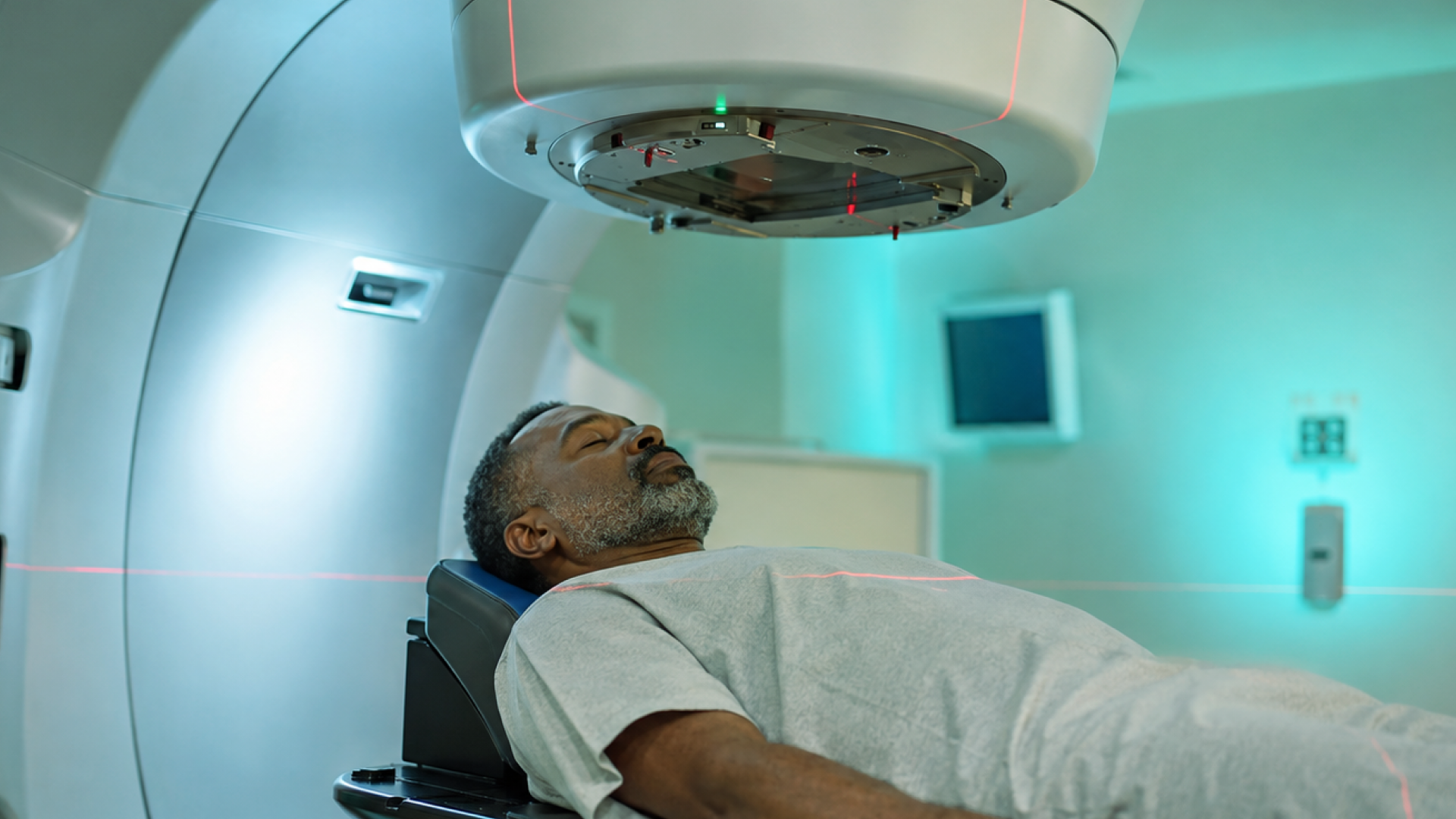
Modern radiotherapy uses precision techniques such as external beam radiotherapy (EBRT), MRI-guided radiotherapy, stereotactic radiotherapy (SRT) and brachytherapy. For aggressive cancers, radiotherapy is usually combined with hormone therapy to improve outcomes[1].
Hormone therapy
Hormone therapy for prostate cancer, also called androgen deprivation therapy (ADT), lowers testosterone, which fuels most prostate cancers. In aggressive disease, hormone therapy is often intensified by adding a second agent such as abiraterone, enzalutamide, apalutamide or darolutamide[5]. The side effects of hormone treatment for prostate cancer can include hot flushes, fatigue, bone thinning and mood changes, but most can be managed with proactive support from your team[3].
Chemotherapy
Chemotherapy for prostate cancer plays a much larger role in rare and aggressive variants than in typical prostate cancer. Drugs such as docetaxel and cabazitaxel are used in metastatic hormone-sensitive and castration-resistant disease, while platinum-based combinations are used for small cell and neuroendocrine subtypes[6].
Targeted therapy and Lutetium PSMA
Targeted therapies such as PARP inhibitors (including olaparib) are available in the UK for men with certain BRCA and other DNA repair mutations[2]. Lutetium PSMA therapy is a newer radioligand treatment that delivers radiation directly to PSMA-positive prostate cancer cells and is offered at selected NHS and private centres for advanced disease[1].
Treatment for oligometastatic disease
When an aggressive prostate cancer has spread to only a small number of sites, this is called oligometastatic cancer. Modern UK practice increasingly treats these limited metastases directly with stereotactic radiotherapy alongside systemic treatment, with the aim of delaying further spread and reducing the need for long-term hormone therapy[1].
Clinical trials
For rare variants, clinical trials can offer access to newer treatments and to the deep expertise of academic centres. Your consultant or specialist nurse can help you understand which UK trials, including those listed on the NIHR Be Part of Research portal, may be suitable for your specific situation[3].
Outlook After a Rare and Aggressive Prostate Cancer Diagnosis
Outlook for any prostate cancer depends on the cell type, stage, overall health and how well the cancer responds to early treatment. A localised aggressive cancer caught and treated early can still be managed with curative intent, while metastatic disease is typically approached as a long-term condition[2].
Survival figures give context, but they are not predictions. Modern treatments for rare and aggressive prostate cancer have improved significantly over the past decade, and many men with advanced disease now live well for years[5].
What helps most is timely, expert care from a team familiar with unusual prostate tumours, combined with attention to overall wellbeing. Bone health, fitness, weight, mental health and intimacy during treatment are all now considered part of good oncology care, not optional extras[3]. The link between exercise and prostate cancer outcomes is increasingly well documented, and most oncology teams actively encourage activity during and after treatment.
When to Seek a Specialist Opinion
Some situations clearly call for additional input from a specialist experienced in rare and aggressive prostate cancer. Consider arranging a specialist or second opinion if any of the following apply to you.
These are the circumstances where specialist review most often adds value:
- Your biopsy shows ductal, small cell, neuroendocrine, squamous, transitional cell, basal cell or sarcoma features[6]
- Your Gleason score is 8 to 10, or Grade Group 4 or 5[2]
- Your PSA is rising quickly, or scans show possible spread[1]
- You have a strong family history of prostate, breast, ovarian or pancreatic cancer[7]
- You are unsure about a recommended plan and want to explore your options
FAQs About Rare and Aggressive Prostate Cancer
What is the most aggressive type of prostate cancer?
Small cell neuroendocrine carcinoma is generally considered the most aggressive type of prostate cancer. It often produces no PSA, grows rapidly and may spread to organs such as the liver and lungs early[6]. Treatment is usually intensive chemotherapy combined with radiotherapy and requires care at a specialist centre. Even within this subtype, outcomes vary depending on stage and how quickly treatment begins.
Can prostate cancer be aggressive with a low PSA?
Yes. Although most aggressive prostate cancers produce elevated PSA, some rare variants, including small cell, ductal and neuroendocrine subtypes, can grow with a normal or only mildly raised PSA[6]. This is one reason MRI and biopsy are important when symptoms or risk factors are present, even if PSA looks reassuring at first glance.
How quickly does rare and aggressive prostate cancer grow?
Aggressive prostate cancers can double in volume within months rather than years and may spread to nearby tissues, lymph nodes or bones in a short space of time[5]. Your consultant will typically use PSA doubling time, MRI changes and biopsy findings to estimate how quickly an individual cancer is progressing, and will use this to guide the urgency and type of treatment recommended.
Is rare and aggressive prostate cancer hereditary?
Some rare and aggressive prostate cancers are linked to inherited gene changes, particularly in the BRCA2, BRCA1, HOXB13 and Lynch syndrome (MMR) genes. Prostate cancer risk is up to 5 times higher in men with a BRCA2 mutation compared with the general population[2]. Not every man with these mutations will develop prostate cancer, but a strong family history of prostate, breast, ovarian or pancreatic cancer is worth discussing with your GP or consultant. Genetic counselling and testing can be arranged through NHS Clinical Genetics services.
How long can someone live with aggressive prostate cancer?
Life expectancy depends on the exact type, stage at diagnosis and how well the cancer responds to treatment. Many men with high-grade but localised disease can be treated with curative intent[2]. For metastatic aggressive prostate cancer, modern hormone, chemotherapy, targeted and radioligand treatments mean that people increasingly live well for several years. Your consultant can give you a much clearer picture based on your own results and history, which is always more meaningful than population averages.
Should I have a second opinion on a rare prostate cancer diagnosis?
Many men with rare or unusual prostate cancers find a second opinion helpful, particularly to confirm the diagnosis, review the proposed treatment plan and explore newer options. UK consultants are well used to working alongside one another, and asking for a second opinion will not disrupt your NHS care[3]. If your cancer involves an uncommon cell type or a high-grade histology, specialist input from a dedicated prostate oncology team can make a genuine difference to both the plan and your confidence in it.
Speak with Dr Carla Perna
Rare and aggressive prostate cancer variants need specialist attention, careful planning and ongoing support. Dr Carla Perna is a consultant clinical oncologist with a focused interest in prostate, testicular and oligometastatic cancer, working across five trusted Surrey and London hospital sites. She offers in-person and online consultations, second opinions and personalised treatment plans built around your priorities, your family and your life.
To discuss your diagnosis or arrange a private consultation, get in touch with the team today. Major UK insurance providers are accepted, and self-pay options are available.
References and further reading
- [1] National Institute for Health and Care Excellence.. Prostate cancer: diagnosis and management. NICE Guideline NG131.. https://www.nice.org.uk/guidance/ng131
- [2] Cancer Research UK.. Prostate cancer risk factors.. https://www.cancerresearchuk.org/health-professional/cancer-statistics/statistics-by-cancer-type/prostate-cancer/risk-factors
- [3] NHS.. Prostate cancer: overview, symptoms and treatment.. https://www.nhs.uk/conditions/prostate-cancer/
- [4] Prostate Cancer UK.. Black men and prostate cancer.. https://prostatecanceruk.org/prostate-information-and-support/risk-and-symptoms/black-men-and-prostate-cancer
- [5] Aparicio AM et al.. Aggressive variants of castration-resistant prostate cancer. Clinical Cancer Research. 2013;19(22):6089–6099.. https://pubmed.ncbi.nlm.nih.gov/24030700/
- [6] Beltran H et al.. Molecular characterisation of neuroendocrine prostate cancer. Cancer Discovery. 2011;1(6):487–495.. https://pubmed.ncbi.nlm.nih.gov/25323607/
- [7] Macmillan Cancer Support.. BRCA2 and cancer risks for men.. https://www.macmillan.org.uk/cancer-information-and-support/worried-about-cancer/causes-and-risk-factors/brca2-and-cancer-risks-for-men