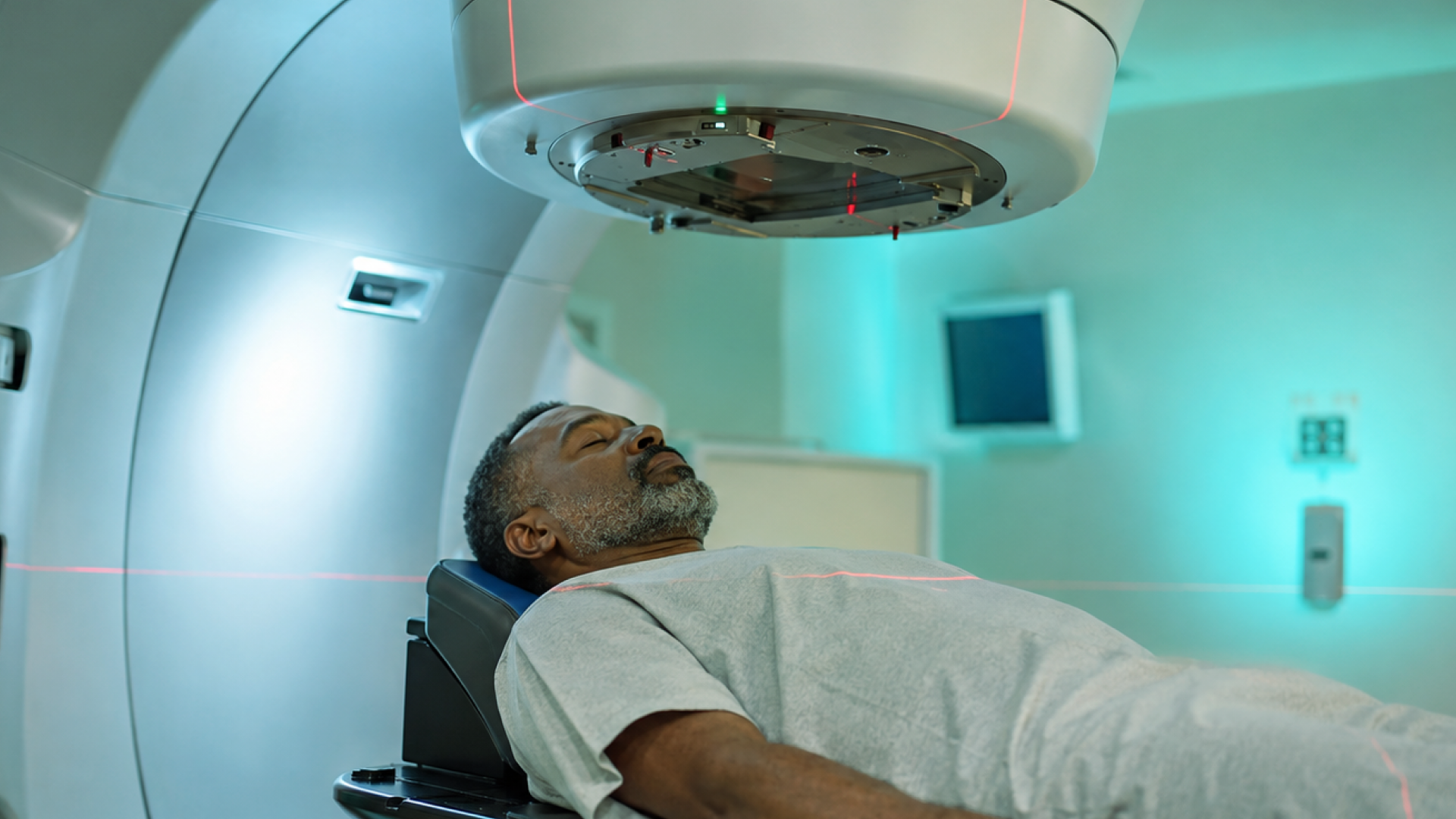
A clinical oncologist explains prostate cancer risk in Black men, what a PSA test involves, and what tends to happen after a diagnosis.


Prostate cancer risk in Black men is higher than in any other group of men in the UK, and that one fact changes several real decisions. It shifts the age at which a chat with your GP makes sense. It changes how a raised PSA result should be read. It can also shape treatment planning once a diagnosis is confirmed.
This guide walks through each of those points in turn. The numbers come first, told plainly, but they are only a starting point. If you live with this raised risk, you also need to know what a high PSA actually means in your case, how to get the most from a GP who may not flag your risk, and why some treatment choices deserve a closer look than the standard route suggests.
How Much Higher Is Prostate Cancer Risk in Black Men
Prostate cancer risk in Black men sits at around double the UK average. The figures are clear, and they have stayed steady for years.
In the UK, around one in four Black men will be diagnosed with prostate cancer, compared with one in eight men overall. That gap has held across two decades of UK data. It lines up with what we see in African Caribbean and African American men, too, which points to something real rather than a quirk of one dataset.
The mortality figures look similar at first glance. Roughly 1 in 12 Black men will die from prostate cancer, against 1 in 24 white men. That sounds frightening, so it is worth being precise about what drives it.
Most of the mortality gap comes from two things. More Black men get prostate cancer in the first place, and Black men tend to be diagnosed later, which narrows the window for a cure. Once a man is diagnosed, a Black man is not more likely to die than a white man diagnosed at the same stage. That is an important point, and it cuts against a lot of the fear around this topic. The higher death rate is mainly a problem of how many men get it and how late it is caught, both of which can be changed.
Age of onset also shifts earlier. Black men are more often diagnosed in their 40s and 50s than white men of the same age. UK guidance reflects this by suggesting a GP discussion about PSA testing from age 45 in Black men, rather than the usual age of 50.
One detail is worth holding in mind. The headline figure applies to men recorded as Black African, Black Caribbean, or Black Other. Men of mixed Black heritage are likely at increased risk as well, although the data for this group is thin and exact figures are still uncertain.
What the 1 in 4 Figure Does and Does Not Tell You
The 1 in 4 statistic is a lifetime risk. It describes the chance of being diagnosed at some point across a whole life, not the chance of being diagnosed this year. A Black man of 48 is not in immediate danger. His odds build over the decades that follow, and he has a real chance of an earlier diagnosis than a white man of the same age.
Personal risk is also shaped by family history, lifestyle, other health conditions, and more. Two Black men of the same age can carry very different risk profiles. The statistic is a reason to keep an eye on things and to start the GP conversation early. It is not a reason to panic.
Why Prostate Cancer Risk in Black Men Is Higher
There is no single cause. The honest answer is that several factors overlap, and they fall into three groups: genetic, biological, and social. Each one adds something, and together they explain most of the gap.
Genetic Differences Behind the Numbers
A region of chromosome 8, known as 8q24, is one of the most studied parts of the genome in prostate cancer. It carries several gene variants linked to earlier onset and more aggressive disease, and those variants are far more common in men of African ancestry. They are not present in every Black man. They simply shift the spread of risk upward across the group.
Work on the androgen receptor has added a second layer. The androgen receptor is a protein inside prostate cells that responds to testosterone and helps drive cancer cell growth. In 2024, researchers at the University of Essex found damaging changes in the DNA that controls how much androgen receptor a cell makes. These changes were common in men of African ancestry and almost absent in men of European ancestry, which may help explain the more aggressive behaviour sometimes seen.
Biology Beyond Genes
Tumour biology in Black men can differ in ways that go beyond inherited DNA. Patterns of inflammation, the make-up of the tissue around a tumour, and the way tumours use energy can all play a part. These features can affect both how fast a cancer grows and how well it responds to treatment.
Baseline PSA behaves a little differently, too. Black men tend to have slightly higher PSA levels than white men, even without any cancer present, which can make a single reading harder to interpret. In practice, the trend across several tests usually tells us more than any one number on its own.
Social and Environmental Factors
Biology sits inside a social setting, and that setting matters. Late diagnosis is the single biggest driver of the mortality gap. The reasons include slower specialist referrals, lower awareness of ethnic risk in the community, reluctance to see a GP about intimate symptoms, and a shortage of health information aimed at Black communities.
Ethnicity also changes what a raised PSA means. A UK study of more than 730,000 men found that in the year after a raised PSA result, 24.7% of Black men were diagnosed with prostate cancer, compared with 19.8% of white men and 13.4% of Asian men. The practical message is simple. A raised PSA in a Black man carries a higher chance of cancer than the same result in a white or Asian man, so it deserves prompt follow-up.
Symptoms and What Should Make You Pause
Early prostate cancer usually causes no symptoms at all. The prostate sits deep in the pelvis, below the bladder, and small tumours rarely press on anything you would notice. This is the main reason PSA testing exists, and why risk awareness matters far more than waiting for symptoms in early detection.
When symptoms do appear, they tend to be urinary. Common ones include needing to pass urine more often at night, a weaker stream, hesitancy at the start, a feeling of not emptying fully, or sudden urgency. Blood in the urine or semen is less common, but it always needs checking.
The tricky part is that these symptoms overlap almost completely with a benign enlarged prostate, which is common in men over 50 and is not cancer. A Black man with no symptoms can still carry a serious disease. A Black man with heavy urinary symptoms may simply have an enlarged prostate. Symptoms alone do not separate the two reliably, which is exactly why risk-based testing beats waiting for warning signs.
Pain tends to come late, if it comes at all. Ongoing lower back, hip, or bone pain that does not settle with the usual measures can be a sign of a disease that has spread beyond the prostate. For a Black man over 45 with this kind of pain and no previous PSA test, it is worth getting checked. Our guide to backache and prostate cancer covers this pattern in more detail.
PSA Testing and Prostate Cancer Risk in Black Men
The PSA blood test is still the main screening tool in the UK, and it is where most prostate cancer cases are first picked up. Knowing what it can and cannot do helps you use it well.
PSA stands for prostate-specific antigen, a protein made by prostate cells. A low level in the blood is normal. A raised level can point to cancer, but it can also come from a benign enlarged prostate, a urine infection, hard cycling, or recent ejaculation. PSA is a signal of probability, not a diagnosis on its own.
Under the UK Prostate Cancer Risk Management Programme, any man aged 50 or over can ask for a PSA test even without symptoms. For Black men, and for men with a strong family history of prostate or breast cancer, that option is commonly offered from age 45.
The UK Screening Position in 2026
The UK has no national prostate cancer screening programme that invites men automatically. The position moved in 2026, so it is worth being clear about where things stand now.
On 28 May 2026, the UK National Screening Committee confirmed its final recommendation. It backed a targeted programme of PSA testing every two years for men aged 45 to 61 who carry a faulty BRCA2 gene and have a family history of breast, ovarian, pancreatic, or prostate cancer. The final version was narrower than the earlier draft, which had also included men with a BRCA1 fault. The committee did not recommend population screening, and it did not set up a formal screening programme for Black men, citing gaps in the evidence. BRCA genes, when faulty, raise the risk of several cancers, including prostate, breast, and ovarian.
Days later, on 2 June 2026, the government accepted that recommendation and went a step further for higher-risk men. It announced that all eligible Black men aged 45 to 74 will be invited to take part in the TRANSFORM screening trial, backed by new funding. TRANSFORM, run by Imperial College London and funded by Prostate Cancer UK and the National Institute for Health and Care Research, is testing the best mix of PSA tests, genetic tests, and fast MRI scans to catch aggressive cancers earlier.
For an individual Black man, the day-to-day position is now better than it was. A PSA test from age 45 remains available on request, a GP should hold an informed-choice discussion rather than refuse outright, and the expanded TRANSFORM trial offers many Black men a structured route into earlier checks that did not exist before.
How to Get the Most From a GP Appointment
A little planning makes the appointment far more useful. These steps help the conversation go your way:
- Mention your ethnicity and any family history of prostate or breast cancer at the start, since breast cancer in close female relatives is itself a risk factor for male prostate cancer.
- Ask for a PSA blood test directly, and ask the GP to note their assessment of your personal risk in your record.
- If the GP seems unsure, ask them to check the Prostate Cancer Risk Management Programme guidance, which has gone to all GP practices in England and covers Black men from age 45.
- If you are turned down, you can complete the Prostate Cancer UK Risk Checker and bring the result, or ask for a second opinion within the practice.
The GP’s job here is to make a shared, informed decision with you, not to act as a gatekeeper. Being clear and a little persistent is reasonable, and it often works.
What a High PSA Result Does and Does Not Mean
A raised PSA does not confirm cancer. It usually triggers one of two next steps. The GP may repeat the test after a short wait to rule out passing causes like infection or recent ejaculation, or they may refer you to a urologist for a closer look. A urologist is a doctor who specialises in the urinary tract and the male reproductive organs.
The modern NHS pathway tends to go to a multi-parametric MRI of the prostate before any biopsy. This scan combines several types of images in one sitting, which maps the gland in detail and highlights any areas of concern. A targeted biopsy follows only if the MRI flags something worth checking. This MRI-first approach has cut down on biopsies that were never needed, while picking up more of the cancers that matter. For Black men, who may gain from earlier and more sensitive checks, that is a real step forward.
What Happens If Prostate Cancer Is Found
A diagnosis changes the questions that matter. The focus moves from whether cancer is there to what type it is and how best to manage it.
Prostate Cancer Risk in Black Men After Diagnosis
Prostate cancer risk in Black men keeps shaping decisions even after the diagnosis is made. Tumour grade, likely growth rate, and the range of sensible treatment options can all follow patterns that are worth knowing early.
Prostate cancer is not one disease. It runs from slow, low-risk tumours that may never need treatment, through to aggressive disease that needs action straight away. UK classification combines two measures. The Gleason score, usually reported between 6 and 10, reflects how abnormal the cancer cells look under the microscope. TNM staging describes the size of the tumour, whether lymph nodes are involved, and whether it has spread. Together, they place a cancer into a low, intermediate, or high-risk group.
In practice, prostate cancer in Black men more often shows up in the intermediate or high-risk group. This partly reflects later diagnosis and partly the biology described earlier. The Cleveland Clinic notes that Black or African ancestry raises the risk, particularly for aggressive cancers and those diagnosed before age 50. This does not mean every Black patient has aggressive disease. It means the first assessment should be careful and built around the individual.
Treatment Options and How the Choice Is Made
For cancer that has stayed within the prostate, the main treatment options are:
- Radical prostatectomy, the surgical removal of the prostate gland.
- External beam radiotherapy, which delivers radiation to the prostate from outside the body. You can read more about external beam radiotherapy and what it involves.
- Brachytherapy, where radioactive sources are placed directly inside the prostate. Our page on brachytherapy explains the approach.
- Active surveillance, where low-risk disease is watched closely with regular PSA tests, MRI, and biopsy rather than being treated right away.
For diseases that have spread to nearby tissue or further, the options widen to include hormone therapy, chemotherapy, and more precise forms of radiotherapy, often used in combination.
A few points apply with particular force to Black patients:
- Active surveillance can still be right for some low-risk cancers. The threshold for switching to active treatment may be a little lower, given the greater tendency toward more aggressive biology. This is a clinical judgement, not a fixed rule.
- Precision radiotherapy, including MRI-guided treatment and stereotactic radiotherapy delivered over a small number of sessions, can target the prostate while sparing nearby tissue. That has direct knock-on effects for urinary and sexual function after treatment.
- Hormone therapy is often combined with radiotherapy for intermediate and high-risk disease. Knowing the side effects of hormone treatment in advance helps you prepare.
For cancer that has already spread at the point of diagnosis, treatment aims to control the disease and protect quality of life. This is the territory of metastatic prostate cancer, where combination treatments have brought real gains in survival over the past decade.
Clinical Trials and Fair Treatment
A hard truth sits underneath much of prostate cancer treatment guidance. Black men have long been underrepresented in prostate cancer clinical trials, both here and abroad.
In US data, Black men make up about 13.4% of the population, but only 6.7% of people enrolled in prostate cancer clinical trials. Since treatment guidelines are built on trial evidence, that gap leaves genuine uncertainty about whether standard protocols work the same way across ethnic groups.
The picture is starting to change. UK studies such as PROFILE at the Royal Marsden have focused on men of African and Caribbean heritage, looking at genetic markers and better ways to screen. Any Black patient starting treatment is worth asking their oncology team whether a relevant trial is open, both for access to newer therapies and to help build the evidence base for the men who come after.
Family History on Top of Ethnicity
Ethnicity and family history work as separate risk factors that add together. They are not the same thing, and having both stacks the odds higher than either one alone.
A Black man whose father or brother had prostate cancer, especially if that relative was diagnosed before 60, sits at a higher risk than either factor would predict on its own. Breast cancer in close female relatives adds to this, because some of the gene faults that raise breast cancer risk, notably BRCA1 and BRCA2, also raise prostate cancer risk. For families with this pattern, an earlier PSA discussion is well justified. Genetic counselling may also be worth considering where several relatives across generations have had cancer. Knowing whether prostate cancer is genetic in your own family helps you and helps your sons and brothers, too.
Lifestyle: What Helps and What Does Not
Lifestyle advice around prostate cancer is often oversold in popular health content. The real evidence is more measured, so it helps to set expectations honestly.
No lifestyle change has been shown to prevent prostate cancer outright. What lifestyle can do is influence how aggressive a cancer becomes, support how well you cope with treatment, and improve recovery. Those are useful effects, but they are not the same as prevention.
Carrying extra weight around the middle is linked with more aggressive and advanced disease. Regular activity, a diet built around plants, fish, whole grains, and healthy fats, and keeping alcohol moderate all support prostate and heart health. Smoking is linked with worse outcomes after diagnosis and is worth tackling at any age. These factors work at the margins. They build resilience rather than offer protection, and they sit alongside a timely PSA discussion, not instead of one. Our article on metabolic syndrome, lifestyle and prostate cancer looks at the metabolic side in more depth.
When to Speak to a Specialist
Knowing who does what takes some of the stress out of the process. The pathway usually moves through three kinds of doctors.
A GP is the first point of contact for PSA testing and the initial assessment. A raised PSA or another concern leads to a referral to a urologist for an MRI and, where needed, a biopsy. Once cancer is confirmed, a clinical oncologist joins the team to plan radiotherapy and systemic treatment. An oncologist is a doctor who specialises in cancer treatment, and a clinical oncologist focuses on non-surgical options such as radiotherapy and drug therapy. Decisions are usually made within a multidisciplinary team meeting that brings together surgeons, oncologists, radiologists, pathologists, and specialist nurses.
Going privately can shorten the wait for MRI, biopsy, and specialist appointments. It also tends to allow longer consultations, which helps when a higher-risk disease needs careful explanation and a proper discussion of the alternatives. Private care runs alongside NHS treatment rather than replacing it, and many men use both at once.
Dr Carla Perna is a consultant clinical oncologist who specialises in prostate cancer treatment, including external beam radiotherapy, MRI-guided treatment, brachytherapy, and hormone therapy. She does not offer screening. She sees patients who already have a diagnosis or a suspicious result and need expert guidance on treatment planning.
Frequently Asked Questions
At What Age Should Black Men Start Thinking About a PSA Test
UK guidance lets any man aged 50 or over request a PSA test without symptoms under the Prostate Cancer Risk Management Programme. For Black men and men with a close family history of prostate or breast cancer, a GP discussion from age 45 is commonly recommended. Testing below 45 is uncommon, but it can be appropriate where there is a strong family history or a symptom that needs explaining. A GP conversation is always reasonable at any age if you are worried.
Is a Digital Rectal Examination Necessary
No. A digital rectal examination, where a clinician feels the prostate through the rectum, is no longer needed before further investigation. The PSA blood test is the first step. A rectal exam can add useful information in men with symptoms, but you can decline it without losing access to PSA testing or a referral. Feeling embarrassed is not a reason to skip the wider assessment.
Does a Normal PSA Result Mean I Do Not Have Prostate Cancer
Not for certain. Some prostate cancers produce very little PSA, so a single normal result does not rule the disease out. If you have ongoing urinary symptoms, unexplained pain, or a strong family history, further checks may still be sensible despite a normal reading. The trend across several PSA tests often tells us more than any single value.
Can Prostate Cancer Risk in Black Men Be Reduced by Diet or Exercise
No lifestyle change has been shown to prevent prostate cancer in any group. What a healthy lifestyle can do is lower the chance of aggressive disease developing and support how well you tolerate treatment if a diagnosis comes. Keeping to a healthy weight, staying active, eating a plant-forward diet, and keeping alcohol moderate all help. These steps work with PSA testing in men at higher risk, not in place of it.
What If My GP Will Not Arrange a PSA Test
Any man aged 50 or over in the UK can request a PSA test after an informed discussion of the pros and cons. For Black men and those with a family history, that option usually applies from age 45. If your GP hesitates, you can ask them to review the Prostate Cancer Risk Management Programme guidance, complete the Prostate Cancer UK Risk Checker and show them the result, or ask for a second opinion within the practice. Being persistent here is reasonable and often the right thing to do.
How Is Prostate Cancer in Black Men Treated Differently
The treatment menu is the same. What can shift is the clinical emphasis. Because prostate cancer in Black men more often shows up at intermediate or high risk, active treatment may be favoured over active surveillance in borderline cases, and the threshold for stepping up therapy may be a little lower. Surgery, radiotherapy, hormone therapy, and combination approaches all remain fully available. The right choice depends on the tumour, your general health, and your own priorities, and it should be made together with a clinical oncologist or urologist.