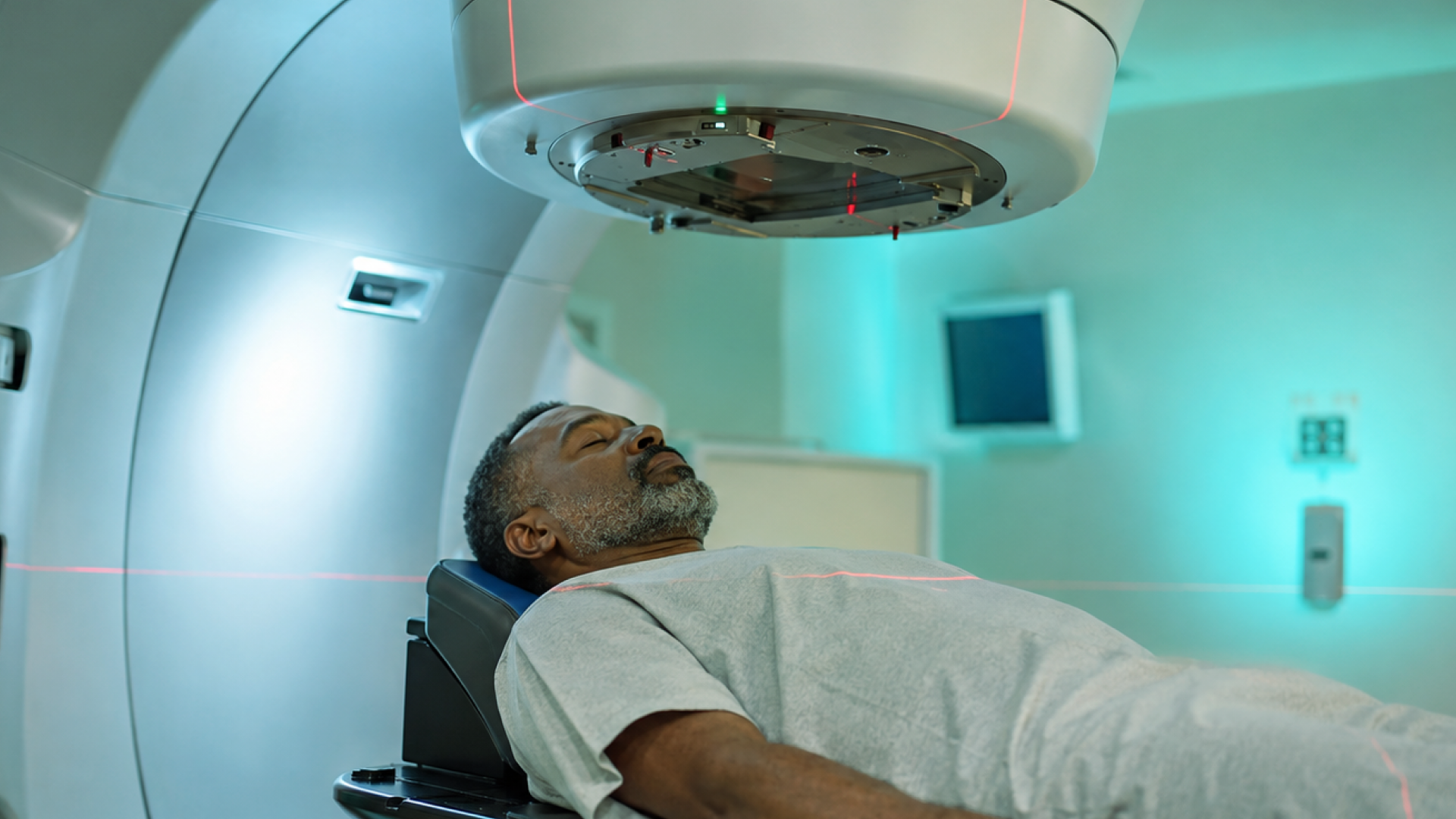
How to choose a private prostate cancer specialist in the UK. Which doctor you need, how to check their credentials, typical fees and what to ask.


Key takeaways
- Two broad kinds of specialists treat prostate cancer: urological surgeons and oncologists. For localised disease, it is often sensible to hear from both before you decide anything.
- You can verify any UK specialist yourself in minutes. The GMC register confirms their specialist status, and PHIN, BAUS and the National Prostate Cancer Audit publish private fees, case volumes and outcomes.
- Ask about numbers. How many cases like yours the specialist treats each year, what their complication rates are, and how those outcomes are measured.
- Get fees in writing before you commit. Consultants must set out their charges in advance, and an initial private consultation usually costs around £200 to £350.
- A trustworthy specialist welcomes second opinions, discusses treatments they do not personally provide, and never promises an outcome.
- Take your PSA history, MRI report and biopsy results to the first appointment. It turns a general chat into a genuinely useful consultation.
A decision most men are never shown how to make
Finding a private prostate cancer specialist is a decision most men face with no warning, usually after a raised PSA or a new prostate cancer diagnosis. The choice is wide and almost nothing explains how to judge one specialist against another. This guide fills that gap. About 1 in 8 men in the UK will be diagnosed with it in their lifetime, rising to 1 in 4 Black men. So many families end up making this choice, and very few feel ready for it.
I am a consultant clinical oncologist, which means I treat prostate cancer with radiotherapy and drug treatments rather than surgery. I have written this to be even-handed. It walks through who treats prostate cancer and which type of specialist your situation calls for. It shows you how to check any doctor’s credentials and results using public UK registers. It covers what private consultations and tests tend to cost. And at its heart, it gives you the questions worth asking before you commit. You can read more about the main treatment options for prostate cancer, from active surveillance through surgery and radiotherapy, alongside this guide.
It is written for anyone with a prostate, which includes trans women and some non-binary people. It is also for the partners and family members researching on someone’s behalf. One thing this guide will not do is tell you which treatment to have. That decision belongs in a consulting room, made with a specialist who knows your results. What it can do is make sure you walk into that room well prepared.
Who treats prostate cancer in the UK?
The most common mistake in private prostate care is searching for a name before you understand the roles. Three types of specialist manage prostate cancer in the UK, and which one you need depends on where you are in the pathway.
Consultant urological surgeons
Urologists investigate prostate problems and perform surgery, including radical prostatectomy, the operation to remove the prostate. Most people’s pathway starts here. Urologists run PSA assessment, MRI-guided biopsy and diagnosis. In the UK, surgeons traditionally use the title Mr, Miss, Ms or Mx rather than Dr, a historical convention that confuses many patients. Look for FRCS(Urol) after their name. It marks the completion of specialist training in urology. Many prostate specialists also list fellowship training in robotic or uro-oncological surgery.
Consultant clinical oncologists
Clinical oncologists treat cancer with radiotherapy and with drug treatments such as hormone therapy and chemotherapy. They deliver external beam radiotherapy, brachytherapy and newer techniques such as stereotactic radiotherapy, also called SABR. Some of them also offer MRI-guided radiotherapy, which uses live scan images to shape the treatment as it happens. They use the title Dr, and carry FRCR, the Fellowship of the Royal College of Radiologists. If radiotherapy is on your list of options, or your cancer needs drug treatment, a clinical oncologist should be part of your care.
Consultant medical oncologists
Medical oncologists specialise in drug treatment alone: hormone therapies, chemotherapy and newer targeted agents. They become central when prostate cancer is advanced or has spread. They are often the specialists closest to clinical trials of new treatments.
As a rule of thumb, a raised PSA or a new diagnosis usually starts with a urologist. A localised cancer where you are weighing up treatment deserves input from both a surgeon and a clinical oncologist. An oncologist usually leads advanced disease. If a clinic cannot tell you clearly which type of specialist you are being booked with, that is worth pausing on.
Why the first specialist you see can shape the treatment you are offered
The type of specialist you sit down with first tends to influence the treatment you are offered. Surgeons operate, so surgical options come naturally to the front of the conversation. Oncologists deliver radiotherapy, so radiotherapy does. This is not dishonesty. It is human nature, and it is well recognised within the profession. But it matters to you, because for localised prostate cancer the main options are closely matched.
The UK ProtecT trial followed men with PSA-detected localised prostate cancer for 15 years. It found no significant difference in prostate cancer deaths between active monitoring, surgery and radiotherapy, with survival around 96 to 97 per cent whichever route men took. Prostate cancer also tends to be very treatable when caught early. Around 8 in 10 men diagnosed with prostate cancer in the UK survive for ten years or more. What differed in the trial was the pattern of side effects. Urinary, bowel and sexual function were affected in different ways by each approach. For many men the choice is less about how well a treatment works and more about which trade-offs they can best live with. That is exactly the kind of decision that benefits from hearing more than one perspective.
So if you have localised disease and are weighing surgery against radiotherapy, consider consultations with both a urological surgeon and a clinical oncologist before deciding. A good specialist will not be offended. Many of us suggest it ourselves.
The multidisciplinary team, your built-in safeguard
The other protection against a one-sided view is the multidisciplinary team, or MDT. This is the standard of care in UK cancer medicine. It is a regular meeting where surgeons, oncologists, radiologists, pathologists and specialist nurses review cases together. Between them, they agree the options that should be put to each patient. Ask any private specialist directly whether your case will be discussed at an MDT, and who sits on it. A confident yes, with detail, is one of the strongest quality signals you can get. Hesitation is a warning.
Know your own diagnosis before you book
You will get far more from any consultation if you understand your own results first, because the specialist you need depends on them. Five pieces of information do most of the work:
- Your PSA level, and how it has changed over time.
- Your MRI result, usually reported with a PI-RADS score from 1 to 5. Higher scores mean the scan looks more suspicious.
- Your biopsy result, graded with a Gleason score or Grade Group from 1 to 5. This describes how aggressive the cells appear.
- Your stage, which describes whether the cancer is contained within the prostate.
- Your risk group, usually low, intermediate or high.
You do not need to become an expert in any of these. But knowing your numbers lets you ask sharper questions, spot when something has not been explained, and compare what different specialists tell you on equal terms. If you have not been given copies of your results, ask for them. You are entitled to them.
The treatment options a good specialist should walk you through
You do not need to research every treatment in depth before your first appointment. You do need to know the shape of the menu, so you can tell whether you are being shown all of it. For localised prostate cancer, the main options are:
- Active surveillance, which is structured monitoring, with treatment only if the cancer progresses.
- Surgery, which is radical prostatectomy, usually robot-assisted.
- Radiotherapy, which is external beam treatment, or brachytherapy delivered from inside the prostate.
- Focal therapies such as HIFU or cryotherapy, offered by some centres for carefully selected cancers.
For advanced disease, treatment is led by drugs. This includes hormone therapy, chemotherapy and newer targeted agents, sometimes alongside radiotherapy. Where prostate cancer has spread to only a few spots, an approach called oligometastatic treatment may use focused radiotherapy to target those areas. And for some men whose cancer has spread more widely, Lutetium PSMA therapy is a newer option that delivers radiation to cancer cells from the inside. These are specialist treatments, and not every centre offers them.
Whatever your risk group, a good specialist should set out every option relevant to you, including the ones they do not provide themselves, and explain why they favour their recommendation.
How to check a private prostate cancer specialist yourself
The UK publishes more independent data on individual specialists and hospitals than almost any country, but hardly any patients know it exists. Before you book, spend five minutes on the following.
- Check the GMC register. Every doctor practising in the UK appears on the General Medical Council’s online register. Search the name. Confirm they hold specialist registration in urology, or in clinical or medical oncology, and that there are no restrictions on their practice. This takes under a minute.
- Look them up on PHIN. The Private Healthcare Information Network publishes data on private consultants, including typical fees, how often they perform certain procedures, and patient satisfaction measures. Consultants must cooperate with this under UK competition rules, so absence is itself informative.
- Check surgical outcome audits. The British Association of Urological Surgeons publishes consultant-level data for operations including radical prostatectomy. The National Prostate Cancer Audit reports results at centre level across England and Wales. Neither makes you an expert, but both tell you whether a surgeon or unit is doing this work regularly and openly.
- Check the hospital, not just the doctor. In England, the Care Quality Commission inspects and rates private hospitals. Scotland, Wales and Northern Ireland have equivalent regulators. Read the latest rating for the site where you would actually be treated.
- Read their professional profile with a critical eye. Sub-specialisation in prostate cancer, a named NHS post, MDT membership, published research and teaching roles all point to a specialist embedded in mainstream practice rather than working at its edges.
None of these sources decides for you. Together, they turn a glossy profile page into something you can properly weigh up.
Experience and volume, the numbers worth asking about
For prostate cancer surgery, experience is not a vague virtue. It is measurable, and it is linked to results. Higher surgical volumes are consistently tied to fewer complications and better recovery after radical prostatectomy. This is why NHS England commissions robotic prostatectomy from centres performing at least 150 of these operations a year. A surgeon operating weekly within a high-volume unit is in constant practice. One operating occasionally is not.
So ask directly how many radical prostatectomies the surgeon performs each year, and how many are nerve-sparing, the technique that aims to protect erectile function where the cancer allows. Ask about their rates of positive surgical margins, longer-term incontinence and erectile dysfunction, and how they measure them. A specialist who collects and shares their outcomes is showing you their standards, not just their results. Treat raw numbers with a little care. Surgeons who take on the most complex cases can have worse-looking figures for the best reasons, and a good one will explain that context without being asked.
The same logic applies to oncology. Radiotherapy techniques vary between centres, so ask which are available for your case. These include intensity-modulated radiotherapy, stereotactic radiotherapy delivered in five sessions rather than twenty, and brachytherapy, where radioactive sources are placed in the prostate itself. Some centres also offer MRI-guided radiotherapy, which tracks the prostate on live images so the beam can be shaped around it during treatment. Ask how many prostate cancer patients the oncologist treats each year, and what image guidance and planning technology the centre uses. The aim is not to memorise the terminology. It is to see whether the specialist can explain, in plain terms, why their recommended technique suits your cancer.
Getting referred, the practical routes into private care
There are four common routes to a private prostate cancer specialist. Your NHS GP can refer you privately. You are entitled to ask, and to name the consultant you want. A private GP can do the same, usually within a day or two, if NHS appointments are the bottleneck. Many providers accept self-referral for an initial assessment, though a referral letter with your history and test results makes the first visit far more useful. And if you have private medical insurance, the insurer controls the route. Most require a GP referral and pre-authorisation before they will cover a consultation. Some run open referral schemes, where the insurer proposes specialists from its approved list rather than simply funding your first choice. Speak to your insurer before booking anything.
It is worth being honest about what private care does and does not buy. Most private prostate cancer specialists also hold senior NHS posts, and NHS cancer treatment in the UK is excellent. What private care offers is speed of access, your choice of a named consultant who sees you at every appointment, and often earlier access to certain technologies or trials. It is a difference of speed, continuity and convenience, not a different standard of medicine. Any marketing that implies otherwise should lower your opinion of the marketer.
You can also move between systems. Plenty of people pay for a rapid private diagnosis and then have treatment on the NHS, or seek a private second opinion mid-way through an NHS pathway and return. Care must be kept as distinct episodes rather than blended within a single treatment. But the door swings both ways, and no reasonable clinician will hold it against you.
Your first private consultation: what happens and what to bring
A first consultation usually lasts 30 to 45 minutes. Expect the specialist to review your results, take a history and possibly examine you. They will set out the options as they see them, along with any further tests needed. You are allowed to bring someone with you, and you should. Two sets of ears retain far more than one, especially when the subject is difficult.
The consultation is only as good as the information in the room, so gather your records first:
- Your PSA results with dates, going back as far as you have them.
- Your MRI report, and the images themselves. The hospital that scanned you can provide these on disc or by secure link if you ask.
- Your biopsy report, including the Gleason score or Grade Group.
- A list of your medications, other health conditions and any family history of prostate, breast or ovarian cancer.
- Your insurance pre-authorisation number, if you are insured.
- Your questions, written down. The next section gives you a full set to choose from.
What to ask a private prostate cancer specialist
These are the things that separate a polished consultation from a genuinely useful one. Nobody asks about all of them. Read through, mark the ten or so that fit your situation, and take them on paper. A good specialist will cover many before you ask, which is itself a reassuring sign.
About their practice and experience
Start with who they are and how often they do this work. Ask about:
- Whether they are on the GMC specialist register, and their sub-speciality within prostate cancer.
- How many patients with your type and stage of prostate cancer they treat each year.
- For surgery, how many radical prostatectomies they personally perform annually, and what proportion are nerve-sparing.
- For radiotherapy, which techniques they offer, and why they would recommend one over another for you.
- Whether they also hold an NHS post, and where.
- Whether they publish or share their outcome data, and if you can see it.
About your diagnosis and your options
Next, get clear on what your results mean and what choices follow. Ask about:
- What your PSA, MRI and biopsy results show, in plain terms.
- All of your options, including the ones they do not provide themselves.
- Whether active surveillance is a safe option for you, and what it would involve.
- What would happen if you chose to do nothing for now.
- How quickly you need to decide, and whether it is safe to take a few weeks.
- Whether they would recommend you also speak to a surgeon, or to an oncologist, before deciding.
About outcomes and side effects
This is where honest specialists speak in likelihoods, not promises. Ask about:
- The results someone like you should realistically expect from the treatment they recommend.
- Their own rates of incontinence and erectile dysfunction after this treatment, and how they measure them.
- What complications are possible, and how they are handled if they happen.
- How the treatment would affect your working life, and for how long.
- What options remain if this treatment does not work.
About the team and the hospital
The people and place around your specialist matter as much as the specialist. Ask about:
- Whether an MDT will review your case, and who is on it.
- Who your named contact is between appointments, and whether a clinical nurse specialist fills that role.
- Which hospital you would be treated in, and its CQC rating.
- Whether the hospital has critical care on site if something goes wrong after surgery.
- For radiotherapy, how many visits you will need and where, and whether daily travel is realistic for you.
- Who covers your care when your specialist is away.
About costs and insurance
Money should be clear and in writing before you commit. Ask about:
- Their consultation fee, and what the diagnostic tests will cost.
- A full written quote for the treatment, and what it includes and excludes.
- Whether it is a fixed-price package, and what happens to the cost if there are complications.
- Whether your insurer recognises them, and whether their fees sit within its limits or leave a shortfall.
- What follow-up appointments and PSA tests would cost over the next few years.
About aftercare and follow-up
Care does not end when treatment does, so ask what the years afterwards look like. Ask about:
- How follow-up works, how often your PSA will be checked, and by whom.
- Who to contact if you have a problem out of hours.
- What support is available for side effects, such as continence physiotherapy, erectile dysfunction treatment and psychological support.
- Whether you could transfer your follow-up to the NHS later if you wanted to.
- Whether there are clinical trials that might be relevant to you, now or later.
Costs and insurance, getting clarity before you commit
Private prostate cancer care is a major financial commitment, and the good news is that you are entitled to clarity. UK competition rules require consultants to set out their fees to you before treatment. The rules follow a Competition and Markets Authority investigation into private healthcare. Much of this information is also published through PHIN. A specialist who is vague about money is falling short of the standard, not sparing you the boring detail.
As a broad guide, an initial private consultation with a prostate cancer specialist usually costs around £200 to £350, with follow-ups somewhat less. Diagnostic packages combining PSA testing, MRI and biopsy vary widely between providers. Expect a few hundred pounds for an initial assessment, rising to well over £1,500 where biopsy is included. Treatment costs vary far more widely still, into five figures for surgery or a full course of radiotherapy. They depend on the hospital, the technique and your insurance position. Exact figures change, and differ by region and provider. Treat every number here as orientation, and get your own quote in writing before committing to anything.
If you are insured
Contact your insurer before your first appointment. You will usually need pre-authorisation, and most insurers keep lists of recognised specialists. Some also name fee-assured consultants, whose charges sit within the insurer’s limits. That protects you from paying a shortfall between the specialist’s fee and what the policy covers. If your insurer runs open referral, it will propose specialists rather than automatically funding the one you found yourself. You can usually still make a case for a named consultant. Ask both the insurer and the consultant’s office to confirm, in writing, exactly what is covered.
Second opinions, normal, useful and your right
Some people worry that seeking a second opinion insults the first specialist. Set that worry down. The GMC’s Good Medical Practice, the professional code every UK doctor works to, is explicit that doctors must respect a patient’s right to a second opinion. Within prostate cancer, where reasonable specialists can weigh the same case differently, second opinions are routine and often actively helpful.
They earn their keep most in three situations: when your cancer sits on the border between two approaches, or when you have only been offered one option. And in advanced disease, where a fresh review can surface trials or newer drug strategies. Arranging one is straightforward. Ask your GP to refer you to a second specialist, or approach one privately yourself. Send everything: PSA history, MRI report and images, and the biopsy pathology report. The second specialist may ask for the original biopsy slides to be reviewed by their own pathologist. That is normal practice, not a criticism of anyone.
And if a specialist reacts badly to the idea of a second opinion, you have just learned something important about them at a very low price.
Red flags, when to look elsewhere
Most private prostate cancer specialists in the UK are skilled, ethical and embedded in mainstream medicine. A small number of patterns should still send you elsewhere:
- Any promise or guarantee of a cure or an outcome. Honest medicine speaks in likelihoods.
- Pressure to book treatment quickly, or discouragement from taking time to think. Most prostate cancers allow weeks for a considered decision, and your specialist should tell you if yours does not.
- Only ever recommending the treatment they provide themselves, with little interest in discussing alternatives.
- No MDT review, or vagueness about whether one happens.
- Fees that are unclear, drip-fed or only revealed after you are committed.
- Absence from the GMC specialist register, or reluctance to discuss their training, volumes or outcomes.
- Irritation at the idea of a second opinion.
None of these, alone, proves a specialist is poor. Two or three together are a pattern, and patterns are exactly what this decision should turn on.
Continuity, support and life after treatment
In NHS cancer care, every patient should have a key worker, usually a clinical nurse specialist, who acts as their consistent point of contact. Private care does not do this by default, and it is one of the most valuable things to ask about before choosing. It is worth asking, by name, who you would contact between appointments, and whether specialist nursing support is part of the service. A named consultant is one of private care’s genuine strengths. A named nurse alongside them is even better.
Look past the treatment itself to the years that follow. Prostate cancer follow-up means regular PSA monitoring on a defined schedule. Treatment side effects deserve proper services rather than sympathy alone. That means continence physiotherapy, effective treatment for erectile dysfunction after prostate cancer treatment, and psychological support when the diagnosis lands heavily, as it often does. Staying active can help too, and there is good evidence for exercise during and after prostate cancer treatment. Ask what is available, where, and at what cost. Ask, too, what happens if complications arise after a procedure, whether the hospital has critical care on site, and how readmissions are handled. These are uncomfortable questions to raise, and entirely reasonable ones. The way a specialist answers them tells you how their service treats patients when things stop going to plan.
Clinical trials
If your cancer is advanced, ask every specialist you see about clinical trials. Ask whether any are relevant to you, and whether their unit runs them or can refer you to a centre that does. Trial access varies widely between hospitals, and for advanced prostate cancer it can meaningfully broaden your options. You can also ask about a specialist’s own research and clinical interests, which often signal how close they sit to newer treatments. A specialist with strong research links will treat the question as natural.
If you are a trans woman or non-binary
Anyone who has a prostate can develop prostate cancer. If you are a trans woman or a non-binary person who has kept your prostate, this guide applies to you too, with two additions worth knowing. Feminising hormone therapy lowers the risk of prostate cancer but does not remove it. It also lowers PSA, so the usual reference ranges do not apply directly. Results need reading with that in mind. When choosing a specialist, it is fair and sensible to ask whether they have cared for trans patients before, and how they will make the service work for you, from correct names and pronouns to reading PSA results on hormone therapy. Prostate Cancer UK publishes dedicated information for trans women and non-binary people. A good specialist will engage with these questions without you having to push.
Ask a clinical oncologist for a second opinion.
A second opinion is a normal part of prostate cancer care, and many specialists welcome it. If you would like a clinical oncologist’s view on your diagnosis and the options open to you, Dr Carla Perna offers private consultations and second opinions across Surrey and London. Bring your PSA history, MRI report and biopsy results, and she will talk you through what they mean and where radiotherapy, hormone therapy or a newer technique such as SABR or Lutetium PSMA might fit. Her approach is to lay out every option that suits your cancer, including the ones she does not deliver herself. Book a consultation or call 01483 806004 to get started.
Frequently asked questions
Do I need a GP referral to see a private prostate cancer specialist?
Not always. Many private providers accept self-referral for an initial assessment. However, most insurers require a GP referral before they will authorise cover, and a referral letter with your history and results makes the first consultation far more useful. An NHS or private GP can refer you, and you can ask for a named consultant.
How much does a private prostate cancer consultation cost in the UK?
An initial consultation usually costs around £200 to £350, with follow-up appointments usually less. Diagnostic tests such as MRI and biopsy are charged separately and vary by provider. Consultants must set out their fees in advance, and PHIN publishes typical fees for many specialists. Always ask for costs in writing first.
Should I see a urologist or an oncologist for prostate cancer?
It depends on your situation. Urologists investigate prostate problems and perform surgery, so diagnosis usually starts with them. Clinical oncologists deliver radiotherapy and drug treatment. For localised cancer where surgery and radiotherapy are both options, it is often sensible to consult both types of specialist. An oncologist usually leads advanced prostate cancer.
How do I check a private prostate cancer specialist is properly qualified?
Search the GMC’s online register to confirm they hold specialist registration in urology or oncology with no restrictions. Then check PHIN, which publishes private consultants’ indicative fees, activity and patient satisfaction, along with the BAUS and National Prostate Cancer Audit outcome data. Finally, check the CQC rating of the hospital where you would be treated.
Can I get a private second opinion and then go back to the NHS?
Yes. Many people pay privately for a rapid diagnosis or a second opinion and have their treatment on the NHS, or return to NHS follow-up afterwards. Private and NHS care must be kept as separate episodes rather than mixed within one treatment, but moving between them is common and entirely legitimate.
Is private prostate cancer treatment better than NHS treatment?
No, and be wary of anyone who implies it is. Most private specialists also hold NHS posts, and NHS cancer care in the UK is excellent. Private care offers faster access, a named consultant throughout, more scheduling flexibility and sometimes earlier access to particular technologies. It is a difference of speed and continuity, not of clinical standards.