How MRI-guided radiotherapy compares with standard radiotherapy: the real differences, the trial evidence, side effects, cost and UK access, from Dr Carla Perna.

Key takeaways
- Both MRI-guided radiotherapy and standard radiotherapy use the same radiation. What differs is how clearly the machine can see your tumour while it treats you.
- An MRI-Linac works from a live MRI, so the team can track the target as it moves and reshape the plan on the day.
- In prostate cancer, the MIRAGE trial found fewer short-term urinary and bowel side effects with MRI guidance and tighter margins.
- It has not been shown to improve cure or survival, so for many people standard radiotherapy is just as good.
- It is not yet routine on the NHS. Many patients reach it through a clinical trial or a small number of private centres, and some cannot have it for MRI safety reasons.
- The right choice depends on your cancer and your circumstances, and that is a decision to make with your oncologist.
The decision this guide is really about
MRI-guided radiotherapy is a way of delivering radiation while a live MRI shows your tumour and the healthy organs around it, and the question most people bring me is a simple one: is it better than the standard radiotherapy that hospitals have used for years, and should you be asking for it? If you or someone close to you has just been offered radiotherapy, you may have seen it described as an MRI-Linac, or by brand names such as Unity or MRIdian. This guide sets it side by side with standard treatment and gives you a straight answer.
I treat prostate, renal and oligometastatic cancers across Guildford and London, and MRI guidance is one of the tools I use most, alongside stereotactic radiotherapy and external beam radiotherapy. So this is written from the clinic rather than the brochure. It walks through what genuinely differs and what does not, the trial evidence in plain terms, and the parts most pages skip: who cannot have it, the honest downsides, what it might cost, and where you can actually get it in the UK. I aim to help you have a sharper conversation with your own oncologist, who stays the right person to recommend a treatment for your situation. You can read more about my MRI-guided treatment service and my prostate cancer care if you want the wider picture first.
One point up front, because it clears up most of the confusion. Both approaches deliver the same kind of radiation to kill cancer cells. Neither is a different drug or a different type of ray. What changes is how well the machine can see your tumour, and the healthy organs beside it, while the treatment is happening. Everything else follows from that single difference.
How standard radiotherapy works
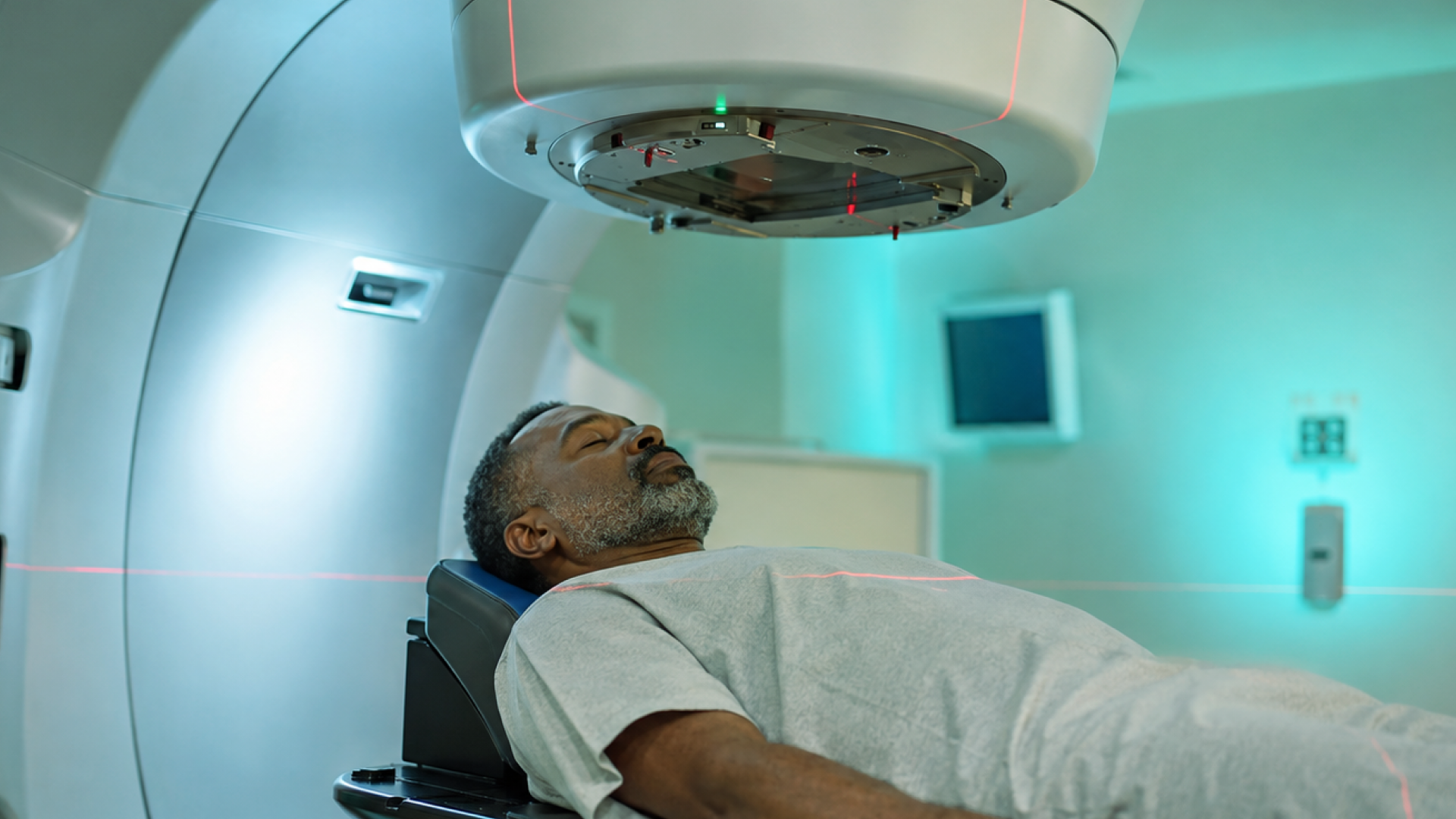
Standard external beam radiotherapy aims high-energy radiation at a tumour from outside the body, usually over a series of daily sessions called fractions. Radiotherapy is a mainstay of UK cancer care, with more than 140,000 people treated with radiotherapy in the UK every year. The challenge has always been the same – hit the cancer hard while sparing the healthy tissue packed in around it. In the pelvis, the bladder and the rectum sit millimetres from the prostate and shift a little every day depending on how full they are.
To steer the beam accurately, standard machines rely on X-ray-based image guidance. In practice, that means one of a few things: a CT scan taken on the treatment couch, X-ray images, or tiny gold markers, called fiducials, placed in or near the tumour beforehand so the machine has something firm to line up on. These methods are accurate and have a long, proven track record. They are the backbone of curative radiotherapy for thousands of people in the UK, and for many cancers they remain exactly the right choice.
They have two built-in limits, though. X-rays and CT show bone and markers well but soft tissue poorly, so the exact edge of a tumour can be hard to define. And the images are usually taken at the start of a session, not continuously, so if the target drifts during treatment the machine does not see it move. To stay safe, the team plans a margin of healthy tissue around the tumour to absorb this day-to-day and moment-to-moment uncertainty. That margin is unavoidable, and some healthy tissue inside it receives a dose.
How MRI-guided radiotherapy works
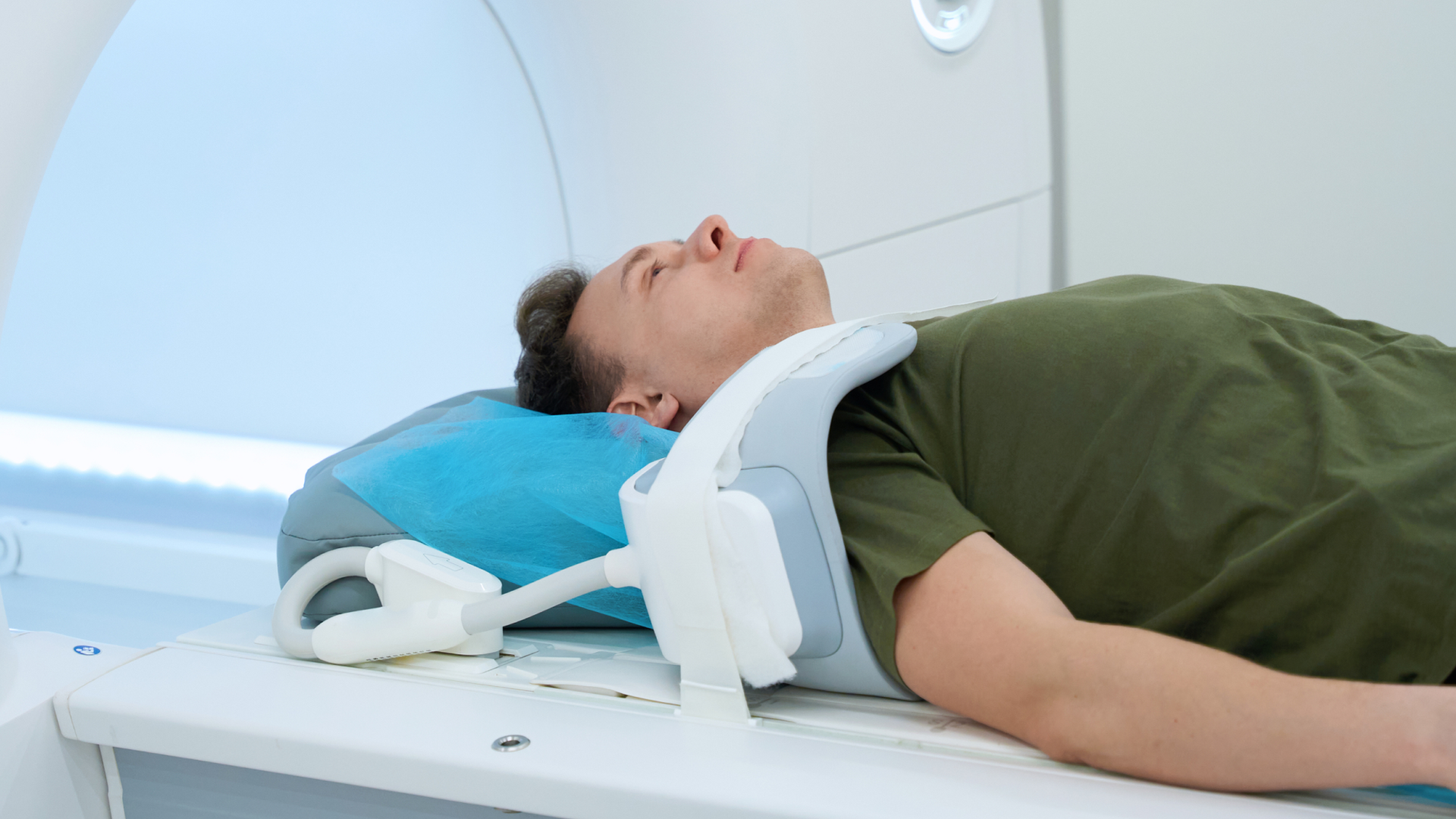
An MRI-Linac combines two machines that used to sit in separate rooms: an MRI scanner and a linear accelerator, the device that produces the treatment beam. Instead of an X-ray snapshot, the team works from a live MRI picture of your anatomy while you are on the couch. In my own practice, I use MRI guidance for prostate cancer, for careful re-radiation of areas that have already been treated, and for selected renal cancers that sit in awkward places.
The advantage of MRI is soft-tissue contrast. It shows the tumour and the organs beside it in far more detail than CT or X-ray, which means the target can be outlined more precisely and, in many cases, without needing implanted gold markers first. Because the imaging is continuous, the team can also watch the target move in real time, for instance as the bladder fills or the bowel shifts, and hold or adjust the beam accordingly.
Adapting the plan at every session
There is a second capability that standard machines do not have, called online adaptive planning. With a clear MRI taken on the day, the team can redraw the treatment plan to match your anatomy as it actually is at that moment, rather than as it was on the planning scan days or weeks earlier. If the rectum is fuller than usual, or the tumour has changed shape slightly, the plan can be reshaped before the beam is switched on. In the clinic, this is the part patients find most reassuring once it is explained, because it means the plan is not fixed in advance and forgotten.
High-field and low-field systems
Two main systems are in clinical use, and they differ in magnet strength. The Elekta Unity is a high-field 1.5 tesla system, the same field strength as a standard diagnostic MRI, giving very detailed images. The MRIdian is a low-field 0.35 tesla system. Both allow real-time imaging and adaptive planning. The practical differences are technical, and which one a centre uses does not, on its own, tell you the treatment will be better or worse. It is a fair thing to ask a centre about, rather than something to worry about.
The two approaches side by side
Stripped of the jargon, here is where the two genuinely diverge and where they are the same.
What is the same
Before the differences, it helps to see how much these two approaches share, because it is more than most people expect.
- The radiation itself, and the goal of destroying cancer cells while protecting healthy tissue.
- The broad experience of lying still on a couch for a series of daily sessions.
- The fact that both are established, effective ways of delivering curative radiotherapy for suitable cancers.
What differs
The differences come down to what the machine can see and how much it can react, and they all trace back to the imaging.
- Imaging: X-ray, CT or gold markers for standard radiotherapy; a live, high-contrast MRI for the MRI-Linac.
- Seeing movement: standard machines take images mainly at the start of a session; the MRI-Linac can track the target continuously.
- Safety margin: clearer imaging can allow a smaller margin of healthy tissue around the tumour, which is the main reason behind any side-effect benefit.
- Adapting the plan: standard radiotherapy usually delivers the same pre-set plan each day; the MRI-Linac can re-plan on the day to match your current anatomy.
- Fiducials: MRI guidance often removes the need to implant gold markers beforehand, which is one fewer procedure.
- Appointment length: MRI-Linac sessions are typically longer, because imaging and re-planning happen while you wait.
That last point is the honest trade-off, and it comes up later. Better vision is not free. It usually costs time in the room.
What the evidence on MRI-guided radiotherapy shows
This is the part that matters most and the part most pages leave out. Better imaging is a sound idea, but the real question is whether it produces better outcomes for patients. The clearest evidence so far is in prostate cancer, so that is where the useful numbers come from. I would read it as encouraging rather than settled.
The MIRAGE trial: fewer short-term side effects
MIRAGE was a phase III randomised trial run at UCLA that compared MRI-guided with CT-guided stereotactic body radiotherapy, a short, intensive five-session course, for localised prostate cancer. Because MRI let the team see the target more clearly, the margin around the prostate was tightened to 2mm in the MRI arm against 4mm in the CT arm. With those tighter margins, moderate urinary side effects fell from 43.4% to 24.4%, and patients reported smaller dips in urinary and bowel quality of life in the months after treatment.
Two-year follow-up reported at a major radiation oncology meeting suggested those benefits were not just short-lived. This is the strongest head-to-head evidence available, and it points in a consistent direction. With tighter margins, MRI guidance can lower the side-effect burden of prostate radiotherapy. It is worth being clear that this is about side effects, not about a higher chance of cure.
The MOMENTUM registry: real-world experience
Alongside the trial data, an international registry called MOMENTUM has been tracking real-world outcomes for patients treated on the 1.5 tesla MRI-Linac, with UK centres among the contributors. It has reported that treatment is feasible and that side-effect rates are low, in line with the wider literature. Registry data is valuable for showing what happens in everyday practice across many centres, though it does not carry the same weight as a randomised comparison.
Which cancers MRI-guided radiotherapy is used for
Prostate cancer is the most studied use and the reason MRI-guided radiotherapy comes up most often. It is worth remembering how common that diagnosis is, since 1 in 8 men will get prostate cancer in their lifetime. The technology is particularly suited to tumours that move, or that sit close to sensitive organs, where seeing the target clearly and in real time offers the most to gain.
Beyond the prostate, it is being used and studied for cancers of the pancreas, liver and lung, for oligometastatic disease, meaning a limited number of secondary tumours, and in other sites in the abdomen and pelvis. Pancreatic cancer is a notable example, because the pancreas sits among several organs that are very sensitive to radiation, and clearer imaging can help protect them. Whether it is the right choice for a particular cancer depends on the tumour, its location and stage, and that judgement belongs with your oncology team.
Who can and cannot have it
Not everyone offered radiotherapy is a candidate for the MRI-Linac, and the reasons are worth understanding early so they are not a surprise.
Eligibility
Suitability depends on the type, location and stage of the cancer, on your general health, and on whether a centre with the equipment can treat you within a sensible timeframe. Your team weighs whether the potential benefit of MRI guidance is meaningful for your case, since for some cancers standard radiotherapy is equally effective and more readily available.
Because it is an MRI, some people cannot use it.
The machine contains a powerful magnet, so the same safety rules that apply to a diagnostic MRI scan apply here. Some implanted medical devices and certain metal implants are not compatible with a strong magnetic field, and a pacemaker or similar device may rule the MRI-Linac out. Severe claustrophobia can also make lying inside the bore for a longer session difficult, though this can sometimes be managed with support. Your team will check your history and any implants carefully before recommending it. If the MRI-Linac is not suitable for you, standard radiotherapy stays a proven and effective option, and being ineligible for one does not mean missing out on good treatment.
What a session feels like
The experience overlaps with a standard radiotherapy session but has its own rhythm. You lie on a treatment couch and stay as still as you can. The machine takes an MRI, the team checks and, where needed, adjusts the plan, and then the radiation is delivered. You do not feel the radiation itself, just as you would not feel an X-ray.
The main practical difference is time. Because imaging and any re-planning happen while you are on the couch, appointments are usually longer than for standard radiotherapy, and there can be some noise from the MRI, which is normal. Most people find the sessions straightforward once they know what to expect. The number of sessions varies with the cancer and the plan, and short, intensive courses are becoming more common, which is covered next.
How many sessions: fraction schedules
Radiotherapy can be delivered over many sessions or a few, and the trend across the board has been towards fewer, larger sessions where the evidence supports it, an approach called hypofractionation. Clearer imaging and tighter margins make very short courses more attractive, because the risk to healthy tissue from each larger dose is better controlled. This is the same thinking behind five-fraction radiotherapy for suitable prostate cancers.
In prostate cancer specifically, MRI-Linac treatment has been delivered over 20 sessions, over 5 sessions, and, within UK research, in as few as 2. Fewer visits are a real convenience, and it can also ease pressure on services. Still, the right schedule is a clinical decision based on your cancer and the evidence for that regimen, not simply a matter of choosing the shortest option. Ask your team what schedule they recommend for you and why.
The honest downsides
A fair comparison has to include the drawbacks, and there are real ones. A page that only lists benefits is not being straight with you.
- Longer appointments. Real-time imaging and on-the-day re-planning take time, so individual sessions are typically longer than standard radiotherapy.
- Limited availability. There are relatively few MRI-Linac machines, so access is patchy and may involve travel or a waiting list.
- No proven survival advantage. The measured benefit so far is fewer side effects in prostate cancer, not better cure rates. For many people, standard radiotherapy will achieve the same cancer control.
- Not suitable for everyone. MRI safety rules exclude some patients, as above.
- Evidence is still maturing. Outside prostate cancer, much of the data is early, and the long-term picture is still being built.
None of this makes MRI-guided radiotherapy a poor choice. It makes it a considered one. For the right cancer and the right patient,t it offers a real advantage in reducing side effects. For others, the standard approach is just as good and easier to access, which is why I still recommend it often.
Getting MRI-guided radiotherapy in the UK
This is where a UK reader is usually let down by general information, much of which describes hospitals in the United States. The picture at home is different and worth stating plainly.2
On the NHS
The MRI-Linac is not yet routine, everyday radiotherapy across the NHS. It is concentrated at a small number of specialist centres, with the Royal Marsden and The Christie among the best known, and for many patients it is accessed through clinical trials rather than as standard care. Being treated within a trial is a well-established route in UK cancer care and comes with close monitoring. It is not second best. If you are interested, the question to ask your oncologist is whether a suitable trial or centre exists for your cancer and whether you could be referred.
Privately
MRI-guided radiotherapy is also offered at a small number of private UK sites. Private treatment can mean quicker access without waiting for a trial place, but it is not available everywhere and, as with any private care, cost applies. A private consultation is a sensible way to understand your options, provided the advice is set against what the NHS can offer for your particular cancer. That balance is exactly what I try to give patients, whether or not MRI guidance turns out to be right for them.
What it costs, and how to weigh it
Cost is the question people most often hesitate to ask. On the NHS, radiotherapy, including treatment delivered within a trial, is funded, so there is no charge to you for the treatment itself. Privately, MRI-guided radiotherapy is a significant investment, and the total depends on the cancer, the number of sessions, the centre and what the package includes, such as consultations, imaging and follow-up.
Rather than fixate on a figure, it is more useful to ask what a quoted price actually covers and what the realistic alternative is. If standard NHS radiotherapy would be equally effective for your cancer, the value of paying privately for MRI guidance is mainly quicker access and, where the evidence supports it, potentially fewer side effects, not a better chance of cure. That is a personal decision, and an honest provider will help you make it rather than push you into it.
Questions to ask before you decide
Whether you are considering an NHS referral or a private consultation, a short list of questions turns a difficult choice into a manageable one.
- For my specific cancer, is MRI-guided radiotherapy likely to offer a real advantage over standard radiotherapy, or would the standard approach be just as effective?
- Is the expected benefit fewer side effects, a shorter course, both, or something else?
- How many sessions would you recommend, and why that schedule?
- Would this be within a clinical trial or as standard treatment, and what does that mean for me?
- Are there reasons I might not be suitable, including any implants or MRI safety issues?
- If I go privately, what exactly does the cost cover, and how does it compare with what the NHS would provide?
There are no wrong answers to bring back from that conversation. The goal is a decision you understand and are comfortable with, made together with the team looking after you.
Everyone this decision affects
Prostate cancer is often the entry point to this topic, so a brief note on who it concerns. Anyone with a prostate can develop prostate cancer, which includes cisgender men and also trans women and some non-binary people. Prostate cancer risk does not disappear after gender-affirming care, and the treatment options, including MRI-guided radiotherapy, apply in the same way. If this is you, you deserve information and care that speaks to your situation, and it is fair to ask your team to do exactly that.
The bottom line
MRI-guided radiotherapy is a real advance in how precisely radiation can be aimed and adapted, and in prostate cancer there is now randomised evidence that this can mean fewer side effects than standard CT-guided treatment. That is a meaningful benefit for the right person. It is not, on the evidence so far, a better chance of cure, and it is not yet widely or routinely available on the NHS.
Standard radiotherapy stays a proven, highly effective treatment that will be the right choice for many people. The best option is the one matched to your cancer, your circumstances and what is realistically available to you, and that is a decision to make with your oncologist rather than from any single web page, including this one. Use this guide to ask sharper questions, and let your team give you the answers that fit your case.
Talk it through with a consultant clinical oncologist
As a clinical oncologist, I can compare all of your options in one place, from MRI-guided and stereotactic radiotherapy through to external beam radiotherapy, and tell you honestly whether MRI guidance would add anything for your diagnosis. Get in touch to arrange a consultation.
Frequently Asked Questions
Is MRI-guided radiotherapy better than standard radiotherapy?
It offers more precise imaging and can adapt the plan during treatment, and in prostate cancer a randomised trial found it lowered short-term side effects compared with CT-guided radiotherapy. It has not been shown to improve cure or survival, and standard radiotherapy stays highly effective. The better option depends on your specific cancer, which your oncologist is best placed to advise on.
What is the difference between an MRI-Linac and standard radiotherapy?
Both deliver the same kind of radiation. Standard radiotherapy steers using X-rays, a CT scan or implanted gold markers, while an MRI-Linac uses a live MRI image that shows soft tissue more clearly and tracks the target as it moves. That clearer view can allow a smaller safety margin and on-the-day adjustments to the plan.
Does MRI-guided radiotherapy have fewer side effects?
In localised prostate cancer, the MIRAGE randomised trial found that MRI guidance with tighter margins reduced moderate urinary and bowel side effects compared with CT guidance. This is encouraging evidence, but results can vary between people and cancers, and side-effect risk is never zero. Your team can explain what to expect for your treatment.
Is MRI-guided radiotherapy available on the NHS?
It is offered at a small number of specialist NHS centres, such as the Royal Marsden and The Christie, and for many patients it is accessed through clinical trials rather than as routine standard treatment. Ask your oncologist whether a suitable trial or centre exists for your cancer and whether you could be referred.
How much does MRI-guided radiotherapy cost in the UK?
On the NHS, radiotherapy including treatment within a trial is funded, so there is no charge to you for the treatment itself. Privately, it is a high cost that varies with the cancer, the number of sessions, the centre and what the package includes. It is worth asking exactly what a quoted price covers and how it compares with what the NHS would provide.
Who cannot have MRI-guided radiotherapy?
Because the machine is a powerful MRI, the usual MRI safety rules apply. Some implanted devices and metal implants are not compatible, and a pacemaker may rule it out. Severe claustrophobia can also make the longer sessions difficult, though it can sometimes be managed. Your team will check your history and any implants before recommending it.