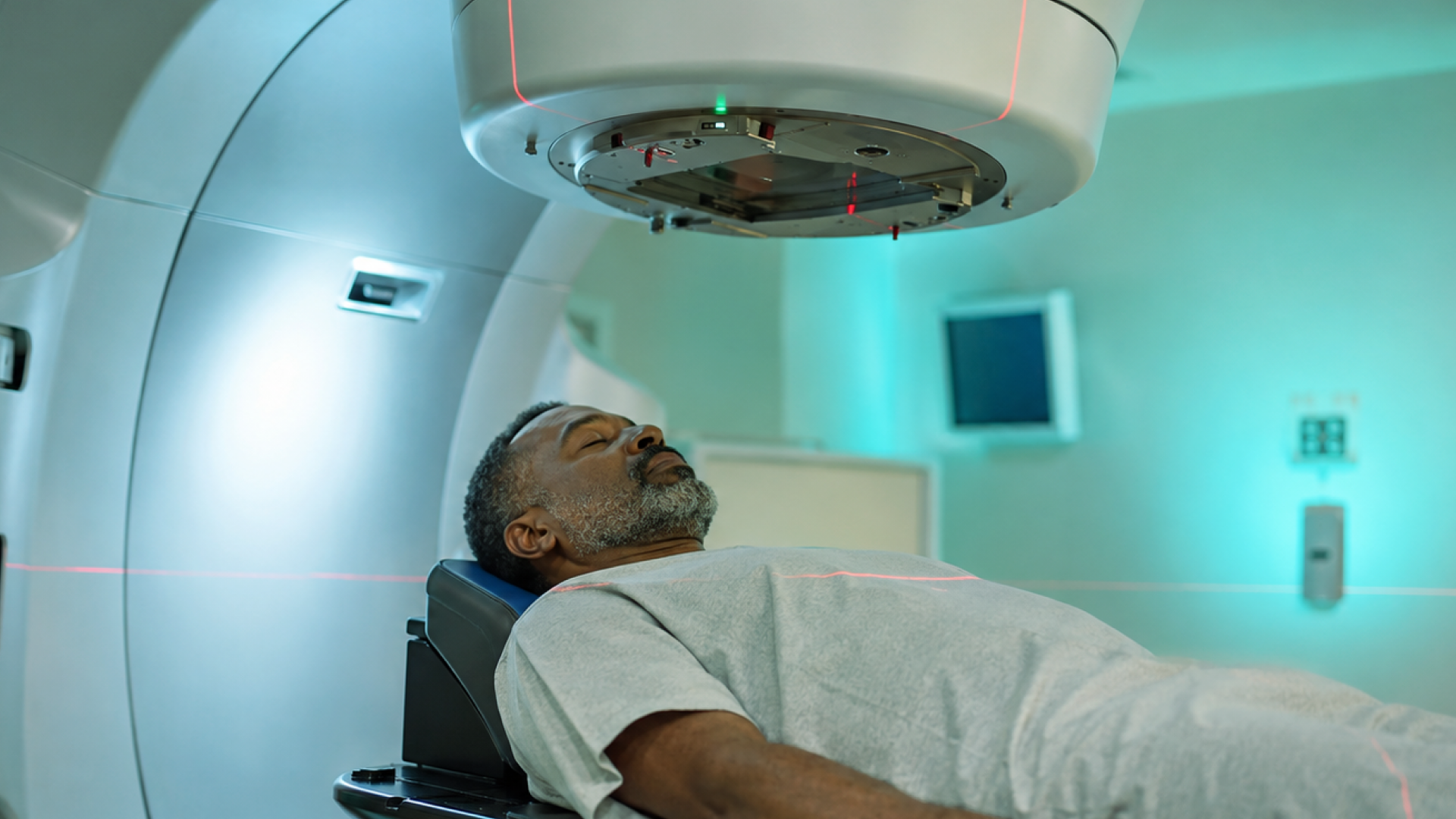
A patient guide to lutetium PSMA therapy for advanced prostate cancer. Learn how it works, who it suits, side effects, UK access, and what to ask your oncologist.


Lutetium PSMA therapy, also called lutetium-177 PSMA radioligand therapy, is a form of internal radiotherapy for advanced prostate cancer. It is given as an intravenous infusion that travels through the bloodstream and seeks out prostate cancer cells, including cancer that has spread to bones, lymph nodes, or other organs. The licensed version in the UK and Europe is lutetium (177Lu) vipivotide tetraxetan, sold under the brand name Pluvicto. The European Medicines Agency (EMA) has authorised it for adults with PSMA-positive metastatic castration-resistant prostate cancer (PSMA-positive mCRPC) who have already been treated with hormone therapy and chemotherapy.³
Metastatic castration-resistant prostate cancer means prostate cancer that has spread to other parts of the body and is continuing to grow despite treatments that lower testosterone. This is the stage where lutetium PSMA therapy is typically considered.
Breaking down the name: lutetium, PSMA, and the ligand
The treatment is built from three parts.
Lutetium-177 is a radioactive isotope that gives off short-range beta particles. PSMA stands for prostate-specific membrane antigen, a protein found at very high levels on the surface of most prostate cancer cells, especially in advanced disease. The ligand is a small molecule, vipivotide tetraxetan in Pluvicto, that binds tightly to PSMA. When lutetium-177 is chemically attached to the ligand, the result acts like a guided tag: it carries radiation directly to cells that carry PSMA while leaving most healthy tissue alone.
How does lutetium PSMA therapy work?
Lutetium PSMA therapy belongs to a field called theranostics, which combines diagnosis and treatment using the same biological target. The same PSMA-seeking molecule that delivers treatment can also be attached to a different tracer, such as gallium-68, to produce detailed PET-CT scans that show where prostate cancer cells are sitting in the body. The therapy then uses that same target to deliver radiation directly to those locations.
The process works like this. The ligand circulates in the bloodstream and attaches to PSMA on the surface of prostate cancer cells. The lutetium-177 attached to the ligand emits beta radiation over a very short distance, typically 1 to 2 mm. That radiation damages the DNA inside the cancer cells, causing them to die. Most healthy tissues, which carry far less PSMA, are largely spared because the radiation does not travel beyond where the ligand has attached.
Why PSMA is such a useful target
PSMA is expressed at roughly 100 to 1,000 times higher levels on prostate cancer cells compared with most healthy tissues. That contrast is what makes the therapy precise. Before treatment starts, your oncologist will arrange a PSMA PET-CT scan to confirm that your cancer expresses enough PSMA for the therapy to be likely to work. If the scan shows little or no PSMA uptake, lutetium PSMA therapy is unlikely to be the right option.
Who is eligible for lutetium PSMA therapy?
Lutetium PSMA therapy is not a first-line treatment. The EMA has licensed Pluvicto for adults with PSMA-positive mCRPC who have already received an androgen receptor pathway inhibitor and taxane-based chemotherapy.³ In practical terms, the therapy is typically discussed when several conditions are met.
The following criteria generally apply:
- Prostate cancer has spread beyond the prostate to other parts of the body, such as the bones or lymph nodes
- The cancer is progressing despite the treatment that lowers testosterone
- You have already had hormone therapy with an androgen receptor pathway inhibitor such as enzalutamide or abiraterone
- You have had at least one taxane chemotherapy, such as docetaxel, or your team believes taxanes are not suitable for you
- A PSMA PET-CT scan confirms the cancer is PSMA-positive
Eligibility is always decided on an individual basis by a multidisciplinary team. Your consultant will also look at kidney and bone marrow function, the pattern of disease on imaging, your overall health, and any prior radiotherapy. Some men with very limited kidney function, significant bone marrow problems, or very low PSMA uptake on the scan may not be suitable candidates.
What to expect during lutetium PSMA therapy
Lutetium PSMA therapy is planned and supervised by a specialist team that typically includes a clinical oncologist, a nuclear medicine consultant, specialist radiographers, and nuclear medicine nurses. The structure of treatment is broadly similar across centres, though the precise protocol varies.
Before treatment starts
Before lutetium PSMA therapy begins, you will have a PSMA PET-CT scan, blood tests to check kidney, liver, and bone marrow function, and a full review of your medical history and current medicines. Your team will walk through the expected benefits and risks, discuss alternatives, and ask you to sign a consent form. Tell your team about all medicines and supplements you are taking, particularly anything that may affect kidney function or blood counts.
During each infusion
Before lutetium PSMA therapy begins, you will have a PSMA PET-CT scan, blood tests to check kidney, liver, and bone marrow function, and a full review of your medical history and current medicines. Your team will walk through the expected benefits and risks, discuss alternatives, and ask you to sign a consent form. Tell your team about all medicines and supplements you are taking, particularly anything that may affect kidney function or blood counts.
After each infusion
Because lutetium-177 is radioactive, you will need to follow simple safety precautions for a short time after each treatment. Typical guidance includes drinking plenty of fluids, flushing the toilet twice, washing hands carefully, sleeping separately for a few nights, and limiting close contact with children and pregnant women for a specific period. Your team will give you written instructions that cover exact timings, because these depend on the dose, your kidney function, and local hospital protocol.
Between cycles, you will have blood tests and clinic reviews, along with imaging to assess how the cancer is responding. Your consultant will use these results to decide whether to continue, adjust the dose, or stop treatment.
How well does lutetium PSMA therapy work?
The main evidence for lutetium PSMA therapy comes from the phase 3 VISION trial, published in the New England Journal of Medicine in 2021. The trial included 831 men with PSMA-positive mCRPC who had already received hormone therapy and one or two taxane regimens.¹
Adding lutetium-177 PSMA-617 to standard care significantly extended both cancer control and survival compared with standard care alone. The headline results were:¹
- Median cancer control time (imaging-based progression-free survival) improved from 3.4 months with standard care alone to 8.7 months with lutetium PSMA therapy added
- Median overall survival improved from 11.3 months to 15.3 months
- Time to serious bone events, such as fractures, also improved in the lutetium PSMA group
One thing worth understanding about those survival figures: they are averages across a large and varied group of men, some of whom responded very well and some of whom did not respond at all. A median of 15.3 months means roughly half the men in the trial lived longer than that. Your oncologist can help you interpret what these numbers might mean for your specific situation.
Quality of life overall was not adversely affected, though serious side effects were more common in the treatment group than in the control group.
Lutetium PSMA side effects and risks
Lutetium PSMA therapy is generally well tolerated, particularly when compared with chemotherapy, but it does carry side effects and risks that need careful consideration. Based on the VISION trial and the EMA’s summary for Pluvicto, the most common side effects include:¹ ³
- Fatigue, which is often the most noticeable effect
- Dry mouth, caused by some PSMA uptake in salivary glands
- Nausea, reduced appetite, or constipation
- Lower blood counts, including reduced red cells (anaemia), white cells, or platelets, can raise the risk of infection or bleeding
- Changes in kidney function over time
- A temporary worsening of pain at disease sites before improvement (sometimes called a flare)
- In a small number of people, more serious effects on the bone marrow
In the VISION trial, serious side effects (grade 3 or higher) affected roughly 1 in 2 people receiving lutetium PSMA therapy plus standard care, compared with roughly 2 in 5 people on standard care alone.¹ Most side effects were managed with supportive treatment, dose adjustments, or short breaks between cycles. Your team will explain the specific risks that apply to your case and give you a contact number to call if you feel unwell at home.
For more on systemic options that may be discussed alongside lutetium PSMA therapy, you can read about hormone therapy for prostate cancer and chemotherapy for prostate cancer elsewhere on this site.
Lutetium PSMA therapy in the UK: NHS and private access
For men in the UK, the practical question is often how to access the treatment, not just whether it works. The current position is more nuanced than the headlines suggest.
In November 2023, the National Institute for Health and Care Excellence (NICE) published Technology Appraisal TA930.² NICE concluded that lutetium-177 vipivotide tetraxetan (Pluvicto) is not recommended for routine NHS use in adults with PSMA-positive hormone-relapsed metastatic prostate cancer after taxane-based chemotherapy and an anti-androgen.² As a result, Pluvicto is not normally available on the NHS for this indication, although men who had already started treatment before the guidance was published may continue.
In practice, men in the UK who are considering lutetium PSMA therapy access it through one of three routes:
- Private cancer centres, including specialist providers in London and other major cities, where the treatment is offered to suitable patients on a self-funded or health-insurance basis
- Clinical trials, which may evaluate lutetium PSMA therapy in earlier disease settings, in combination with other treatments, or using different radioligands
NICE guidance is reviewed and can be updated. It is always worth asking your oncologist whether the recommendation has changed since your last appointment. The Royal Marsden has set up a dedicated lutetium-177 PSMA service for eligible patients, and further information on UK clinical trials can be found through Cancer Research UK and Prostate Cancer UK.4 5
Lutetium PSMA therapy cost in the UK
Because Pluvicto is not routinely funded by the NHS for this indication, most UK patients pay privately or through health insurance. The number of cycles required, the imaging needed, and any inpatient care all affect the overall cost. Specialist centres will provide a written estimate after an initial consultation. If you have private health insurance, contact your insurer directly to confirm what they cover before your first appointment.
Questions to ask your oncologist about lutetium PSMA therapy
Going into a consultation with a written list of questions tends to lead to better conversations than trying to remember everything in the room. Some useful prompts for your next appointment:
- Am I currently eligible for lutetium PSMA therapy, or might I be eligible in the future based on the stage and type of my cancer?
- Do my scans suggest my cancer is PSMA-positive, and would I need a PSMA PET-CT to confirm this?
- What benefits and side effects should I realistically expect, given my health, age, and treatment history?
- How would treatment be accessed in my situation: NHS, private, health insurance, or a clinical trial?
- If I am not eligible now, what would need to change for me to become eligible?
Dr Carla Perna’s clinics in Surrey and London offer assessment and management of advanced prostate cancer, including discussion of lutetium PSMA therapy alongside other options such as hormone therapy, chemotherapy, and modern radiotherapy. If you would like a personalised discussion of your case, you can book a consultation or learn more about the lutetium PSMA therapy service.
Lutetium PSMA therapy FAQs
What is lutetium PSMA therapy in plain terms?
Lutetium PSMA therapy is a targeted form of internal radiotherapy for advanced prostate cancer. A small molecule is attached to a radioactive substance called lutetium-177 and injected into the bloodstream. The molecule locks onto a protein called PSMA (prostate-specific membrane antigen), which is found at very high levels on the surface of prostate cancer cells. The radiation then kills the cancer cells while largely sparing surrounding healthy tissue. Treatment is usually given as up to six infusions, each six weeks apart, in a specialist nuclear medicine unit.³
How much does lutetium PSMA therapy extend survival?
In the VISION trial, adding lutetium-177 PSMA-617 to standard care extended median overall survival from 11.3 months to 15.3 months in men with PSMA-positive mCRPC. Cancer control time also improved, from 3.4 months to 8.7 months.¹ Those are averages across a broad group of men. Some responded significantly better than the median; others less so. Your oncologist can help you interpret what these figures might mean for your individual case.
Is lutetium PSMA therapy available on the NHS?
NICE Technology Appraisal TA930, published in November 2023, does not recommend lutetium-177 vipivotide tetraxetan (Pluvicto) for routine NHS use in adults with PSMA-positive hormone-relapsed metastatic prostate cancer after taxane chemotherapy and an anti-androgen.² As a result, it is not normally available on the NHS. Men who had already started treatment before TA930 may continue. NICE guidance is reviewed periodically, so ask your oncologist about the current position.
Is lutetium-177 PSMA available in the UK?
Yes. Lutetium PSMA therapy is available at selected private cancer centres and through certain clinical trials in the UK, despite the current NICE position on routine NHS funding.⁵ The Royal Marsden, for example, has set up a dedicated lutetium-177 PSMA service for eligible patients.⁴ Your consultant can advise you on which UK centres currently offer the treatment and whether any are appropriate for your situation.
Who may not be suitable for lutetium PSMA therapy?
The treatment may not be the right option if your prostate cancer does not strongly express PSMA on a PET-CT scan, if your kidney or bone marrow function is too low to tolerate the treatment safely, if your general health makes further active treatment unlikely to help, or if another treatment offers a better balance of benefit and risk for you. These decisions are always made individually by a multidisciplinary team based on your scans, blood results, and overall health.³
What are the main lutetium PSMA side effects?
The most common side effects are tiredness, dry mouth, nausea, and lower blood counts. A smaller number of people experience more serious effects on bone marrow or kidney function.¹ Most side effects can be managed with supportive care, dose changes, or brief breaks between treatment cycles. Your team will give you written guidance and a direct contact number for any concerns between cycles.
Is lutetium PSMA therapy a cure for prostate cancer?
No. Lutetium PSMA therapy is not a cure. In the men studied in the VISION trial, it extended life and slowed disease progression in advanced PSMA-positive disease.¹ It can also help control symptoms. The aim is to give you more quality time, rather than to remove the cancer entirely.
References and further reading