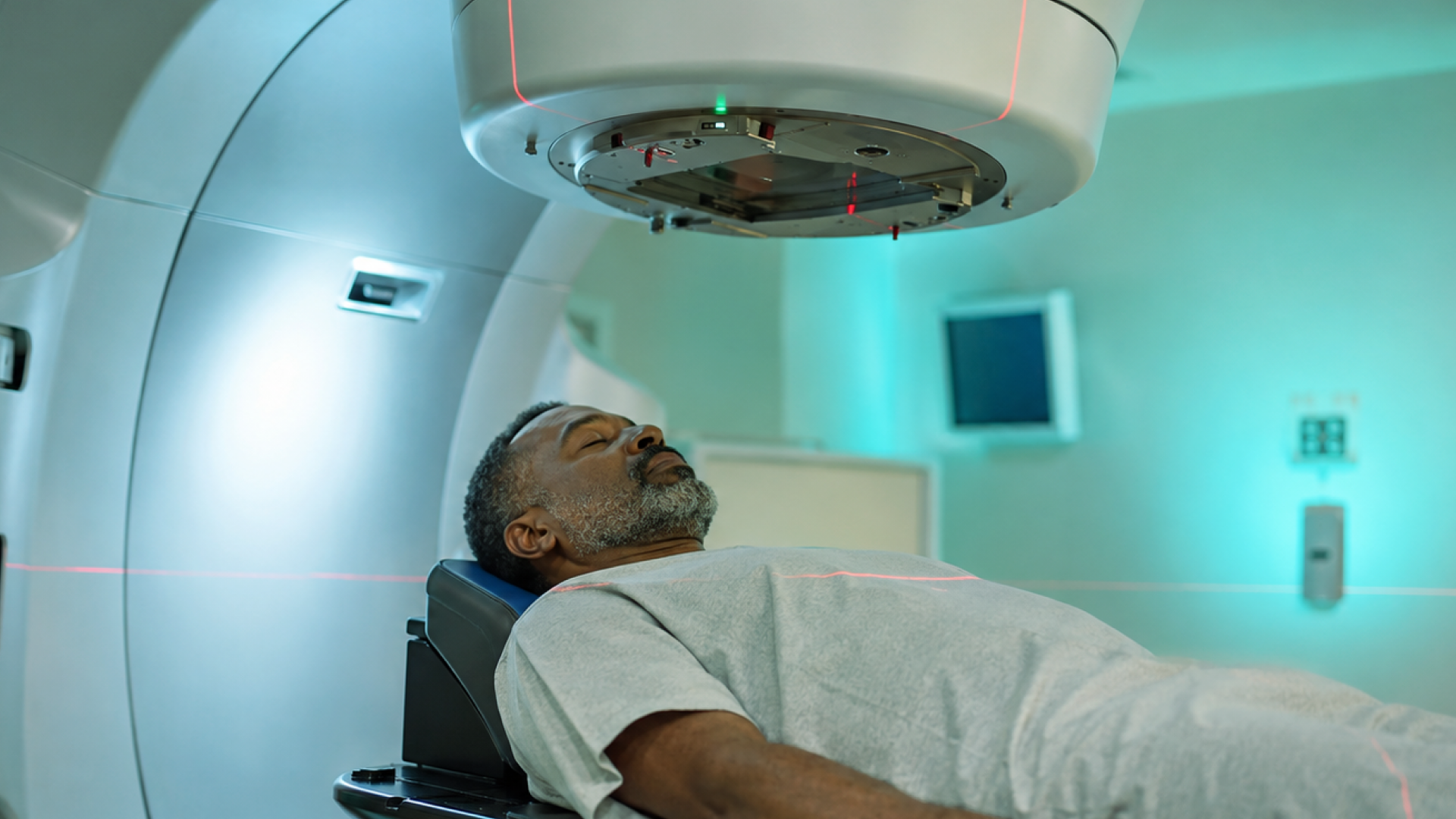
Understanding the stages of prostate cancer is essential for making informed treatment decisions. This guide explains how prostate cancer progresses from localized stages to metastatic disease, how doctors detect its spread, and what it means for treatment and long-term management.


It is vital to understand the different stages of prostate cancer to make informed decisions about diagnosis, treatment, and care. The development of prostate cancer does not occur in the same way in all men. Its behaviour can vary depending on the timing and progression of its diagnosis.
In this article, you will learn more about how prostate cancer is staged, how it is diagnosed as having spread, and when it is diagnosed as metastatic. In addition, we will help you understand how prostate cancer is staged and its effect on its treatment and prognosis.
How Prostate Cancer Is Staged
The stages of prostate cancer indicate the extent of the development of the cancer and whether it has spread beyond the prostate. The factors that determine the stage of prostate cancer include PSA levels, Gleason score, biopsy and imaging scans.
Doctors use the TNM system to classify cancer. The “T” stands for the size and extent of the main tumour, “N” stands for the involvement of nearby lymph nodes, and “M” stands for the presence of metastasised cancer. These factors combine to determine the stage of prostate cancer.
Most people want to know about the 4 stages of prostate cancer. Simply put, prostate cancer is classified as being at either stage 1, stage 2, stage 3, or stage 4, depending on whether it is still contained in the prostate or if it has spread to other parts of the body.
Stage 1 and Stage 2: Cancer Confined to the Prostate
In the early stages, prostate cancer is localised within the prostate gland. These types of cancer are typically slow-growing and may or may not display any obvious signs or symptoms.
Stage 1
Stage 1 prostate cancer is small and contained in one part of the prostate gland. It is normally found during investigations for other diseases or during routine PSA tests.
At this stage, the cancer cells typically have a lower Gleason score, indicating they do not appear particularly aggressive under a microscope. It is also important to note that most people do not display any signs of prostate cancer, which is why it is so crucial to get screened.
Stage 2
Stage 2 prostate cancer is still contained in the prostate gland but may be larger or may display a worse Gleason score. While still contained, stage 2 prostate cancer is more dangerous than stage 1.
The early stages of prostate cancer can be treated through active surveillance, surgery, and radiotherapy. Its treatment depends on a number of factors related to the patient. These factors include the patient’s age and general health.
Stage 3: Locally Advanced Disease
Stage 3 prostate cancer involves a tumour that has outgrown the prostate gland and possibly extended to other areas around the gland. This could include the seminal vesicles. However, the cancer has not spread to distant areas of the body.
At this stage, the cancer is described as locally advanced. Patients may begin to notice urinary symptoms, although some men still have minimal complaints.
The treatment of prostate cancer by stage becomes more complex once the disease extends beyond the prostate. Management may involve a combination of radiotherapy and hormone therapy, and in selected cases, surgery.
Stage 4: When Prostate Cancer Becomes Metastatic
Stage 4 prostate cancer is split into two subtypes. The difference depends on whether the cancer sits in nearby lymph nodes only, or has spread further to sites such as the bones, liver or lungs.
Cancer that reaches distant organs is called metastatic prostate cancer. Imaging picks this up by finding tumour deposits beyond the pelvis.
Bone is the most common site of spread. Some men are diagnosed from scans before they notice anything, while others notice a change first. The symptoms of metastatic prostate cancer vary depending on where in the body it has settled.
Treatment at this stage aims to control the cancer and manage symptoms.
How Doctors Detect Metastatic Spread
The determination of metastatic prostate cancer is a complex process, and imaging is an important aspect in the staging of high-risk cancer.
Common investigations include:
- CT scans to evaluate lymph nodes
- MRI scans to assess local extension
- Bone scans to detect skeletal involvement
- PET scans in selected cases for detailed assessment
If distant metastases are identified, the cancer is classified as Stage 4 with M1 disease. This distinction is important because it changes the overall treatment strategy.
Treatment Decisions Based on Stage
Staging directly influences management. The 4 stages of prostate cancer guide clinicians in selecting the most appropriate approach, balancing effectiveness with side-effect profiles.
For localised cancer, treatment may include:
- Active surveillance for low-risk cases
- Radiotherapy (including SABR and Brachytherapy)
- Surgery
For locally advanced disease, combined treatments are often recommended. The hormone treatment is usually used in combination with radiotherapy to prevent the recurrence of the disease.
For metastatic cancer, systemic therapies become central. These may include hormone therapy, chemotherapy, targeted treatments, or newer agents such as androgen receptor pathway inhibitors. The focus is no longer on the cure but on the long-term management of the disease.
What Does "Metastatic" Really Mean?
Metastatic prostate cancer is a condition where cancer cells from the original tumour spread to other parts of the body through the bloodstream or the lymphatic system. At this point, the focus is no longer on removing the original tumour but on managing the disease.
Yet, metastatic does not mean untreatable. Modern oncology has transformed outcomes for many patients. With personalised treatment plans, careful monitoring, and access to advanced therapies, men with metastatic prostate cancer can maintain a meaningful quality of life.
It is also important to understand that progression is not always rapid. Some men live with stable metastatic disease for extended periods under ongoing therapy.
Monitoring and Ongoing Assessment
However, even after treatment has commenced, staging is not static, and doctors will remain vigilant regarding the patient’s PSA levels and imaging results to assess treatment effectiveness.
When the cancer progresses despite treatment, the treatment plan can be changed, a process called sequential therapy.
Close follow-up ensures that changes are identified early and addressed promptly. Multidisciplinary care involving oncologists, urologists, radiologists, and specialist nurses helps optimise outcomes.
Emotional and Practical Considerations
When the cancer is diagnosed at an advanced stage, it can be quite daunting for the patient, and they will have several concerns, such as survival, side effects, and the effects of the cancer on the patient’s life.
Talking to a specialist would also help the patient better understand their situation. It is also important to take note of the fact that not all types of cancer diagnosed as being at Stage 4 have the same type of prognosis, with individual factors always playing a key role in the prognosis of the type of cancer.
Psychological support, pain management, and rehabilitation would also go a long way toward ensuring the patient’s overall well-being, and it is important to consider both medical and psychological needs in cancer treatment.
Wrapping Up
Knowing the stages of prostate cancer will help the patient make more sense of the diagnosis and the treatment options available for the patient’s condition. From localised disease confined to the prostate to metastatic cancer that has spread to distant organs, each stage carries different implications for management and outlook.
If you have any questions about your diagnosis or would like a personalised assessment, a consultation with Dr Carla Perna will provide you with a clear understanding of your condition and choosing the right path forward.